Rumpl Tech Towel Tote Review: The Beach-and-Bathhouse Two-in-One

The humble towel doesn’t get much thought—until you’re juggling one along with everything else you’re trying to carry.

You know the walk. From the campsite to the bathhouse, arms full: towel draped over one shoulder, toiletries in one hand, dry clothes tucked under an elbow, flip-flops threatening to escape. Or the beach version, hauling the towel plus sunscreen, keys, and a phone across hot sand. The Rumpl Tech Towel Tote fixes that in a way that’s almost embarrassingly obvious once you’ve used it: it’s a towel that turns into a bag.

The Two-in-One Trick

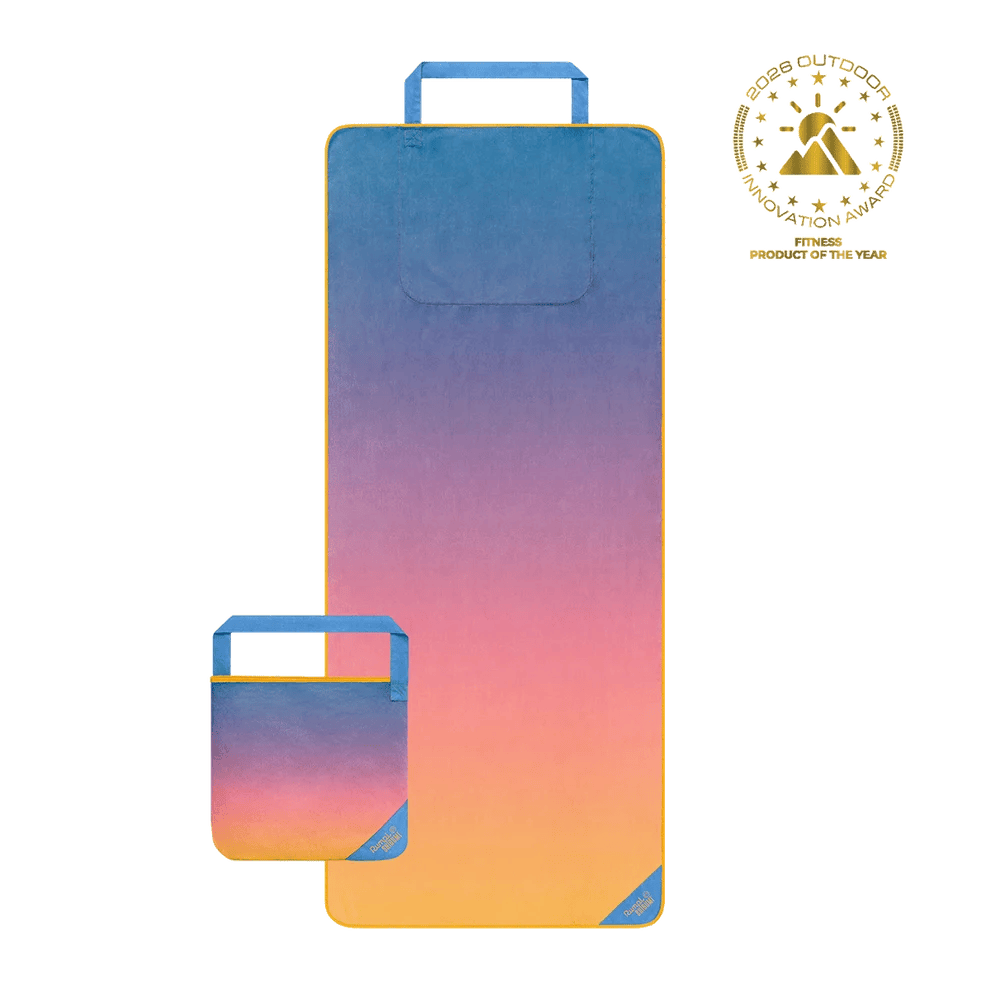
Here’s the whole idea. Most of the time it’s a large, quick-drying towel. But it converts into a tote bag—so the thing you dry off with is also the thing you carry everything in.

That flips the usual routine. Load your soap, shampoo, and clean clothes into the tote, sling it over your shoulder, and walk to the showers hands-free. Once you’re there, unfold it back into a towel and dry off. No separate shower caddy, no armful of loose gear, no plastic bag doing double duty. One piece of kit covers the whole trip there and back.

It sounds like a small thing. It is not a small thing the third time you make that walk in a weekend.

Perfect for the Campground Bathhouse

This is the use case that won me over. Anyone who’s done a few nights at a developed campground knows the bathhouse shuffle—the trek across the loop to the showers with everything you need balanced precariously in your arms.

With the Tech Towel Tote, that walk gets civilized. Everything goes in the tote, you walk over hands-free, and there’s a paracord hanging loop so you can hang it on a hook inside the shower stall instead of searching for a dry spot to set your stuff down (there never is one). There’s also an integrated stash pocket with a paracord key loop, so your car key or campsite key stays clipped and secure while you shower rather than sitting in a puddle. Small details, but they’re exactly the details that matter in a wet, cramped bathhouse.

And the Beach

The same logic makes it a natural for beach and pool days.

Pack your essentials into the tote for the walk from the car, spread it out as a towel when you arrive, then load everything back up when it’s time to go—no sand-covered pile of belongings to gather. The Nanotex® cooling finish helps with temperature regulation when you’re lying out in the sun, and the fabric absorbs up to 4x its weight in water, so it actually dries you off rather than just smearing the water around like a thin travel towel.

For anyone who packs light for trips abroad or road trips, it earns its place there too: one item that’s a towel, a beach mat, and a tote all at once is exactly the kind of multi-tasker you want when space is tight.

The Practical Details

Rumpl clearly designed this for real, damp, sandy use:

  • Quick-drying and absorbent: the recycled poly-spandex blend soaks up 4x its weight in water and dries fast, so it’s not still soggy the next morning.
  • Antimicrobial treatment: resists the funky mildew smell that plagues towels left balled up in a bag or trunk—key for a towel that lives through a whole trip.
  • Two sizes: a Single (30″ x 72″, 1.2 lbs) for one person, and a Double (50″ x 72″, 1.8 lbs) big enough to share or use as a beach blanket.
  • Machine washable: hang dry or tumble on low. Easy care for gear that gets abused.
  • Sustainably made: primarily post-consumer recycled polyester, from a B Corp– and Climate Label–certified brand.

The Shibumi Fade colorway is a limited-edition Rumpl x Shibumi collaboration, so the look is a step up from a plain gym towel—it reads more “designed beach piece” than “afterthought.”

A Few Honest Notes

At $69.95, it’s a premium price for a towel, full stop. What you’re paying for is the convertibility, the tech finishes, and the build quality—if all you need is something to dry off with, a basic towel costs a fraction of this. The value case rests entirely on whether the towel-to-tote function and the quick-dry, anti-odor performance actually matter to how you travel and camp. For frequent campers, beachgoers, and light-packing travelers, I think they do. For occasional use, it may be more towel than you need.

One note on the sizes: the Single is a solidly sized personal towel, but if you want to use it as a beach blanket or share it, spring for the Double—the extra width makes a real difference.

The Verdict
The Rumpl Tech Towel Tote takes the most overlooked item in your bag and makes it genuinely clever. The towel-to-tote conversion turns the campground bathhouse walk and the beach schlep from a juggling act into a one-item, hands-free trip, and the quick-dry, antimicrobial, cooling-finish performance means it works as a towel too—not just as a gimmick.

It’s priced as a premium piece, and casual users can get by with less. But if you camp at developed sites, hit the beach often, or travel light and want your gear to multitask, this is one of those small upgrades that quietly makes every trip easier. It’s earned a permanent spot in our camp bin—and pairs nicely with the Rumpl Wrap Sack if you’re building out a Rumpl camp setup.

Technical Specs at a Glance

Rumpl Tech Towel Tote

  • Sizes: Single 30″ x 72″ (1.2 lbs) · Double 50″ x 72″ (1.8 lbs)
  • Packed: Single 17″ x 16″ · Double 20″ x 16″
  • Towel fabric: 55% post-consumer recycled + 35% virgin polyester, 10% spandex
  • Pocket: 100% recycled VersaWeave 30D ripstop polyester
  • Absorbency: Up to 4x its weight in water
  • Features: Converts towel-to-tote, integrated stash pocket with paracord key loop, paracord hanging loop, Nanotex® cooling finish, antimicrobial treatment
  • Care: Machine washable; hang dry or tumble dry low
  • Colors: Shibumi Fade (limited edition), Midnight Retro Stripes, Tapestry Tie Dye
  • Certifications: B Corp, Climate Label Certified
  • Price: $69.95

Rumpl Wrap Sack 20 Review: The Sleeping Bag for People Who Hate Sleeping Bags

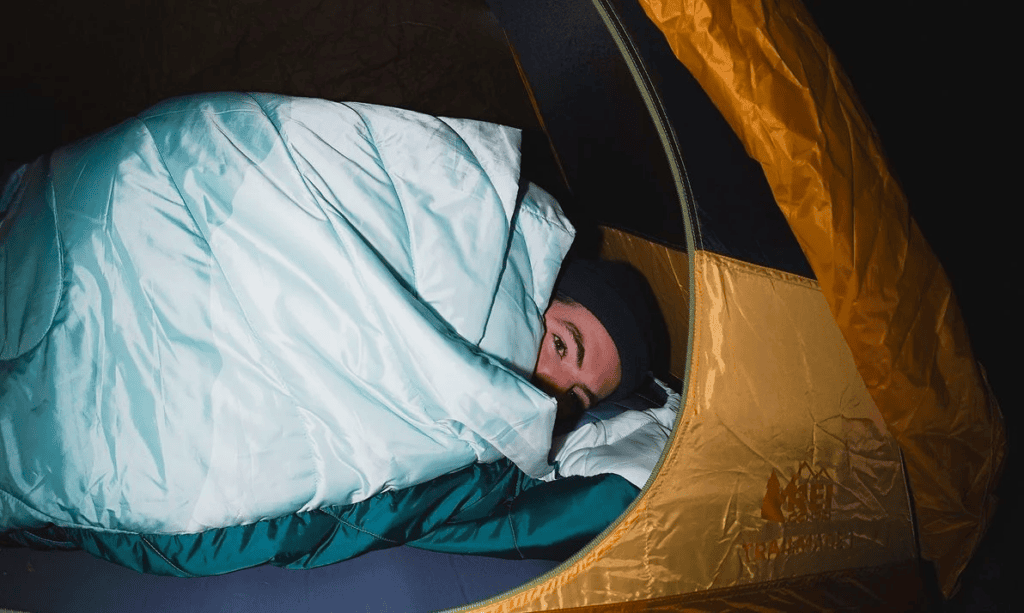
Some people love the cocoon of a sleeping bag. My wife is not one of them.

For her, a traditional mummy bag feels like a straitjacket—zipped in, pinned down, arms trapped at her sides. On our family camping trips, she’s opted out entirely, building a bed of sheets and a blanket instead and just dealing with the cold that creeps in around the edges. A “sleeping bag that doesn’t feel like a sleeping bag” has always sounded like marketing nonsense.

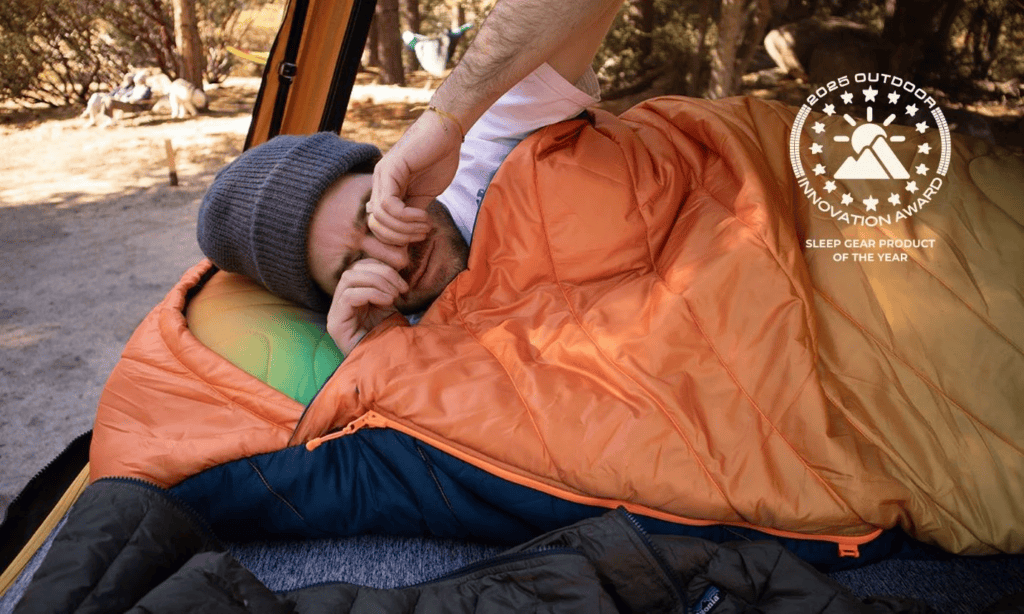
Then she took the Rumpl Wrap Sack 20 on a school-trip chaperone weekend in the Rocky Mountains—and actually slept.

The Problem With Regular Sleeping Bags

If you’ve never felt it, the mummy-bag claustrophobia is hard to explain. If you have, no explanation is needed.

It’s the sense of being sealed in. You can’t roll over without the whole bag rolling with you. You can’t stick a leg out to cool off without unzipping the entire thing and letting all the heat escape. For a restless or warm sleeper—or anyone who just likes to move—a standard bag turns a night outside into a night of low-grade struggle. That’s why my wife had written sleeping bags off completely.

The Wrap Sack is built for exactly that person.

How the Wrap Sack Is Different

Rumpl started as a blanket company, and it shows. The Wrap Sack approaches the problem from the blanket side rather than the bag side, and that’s the whole trick.

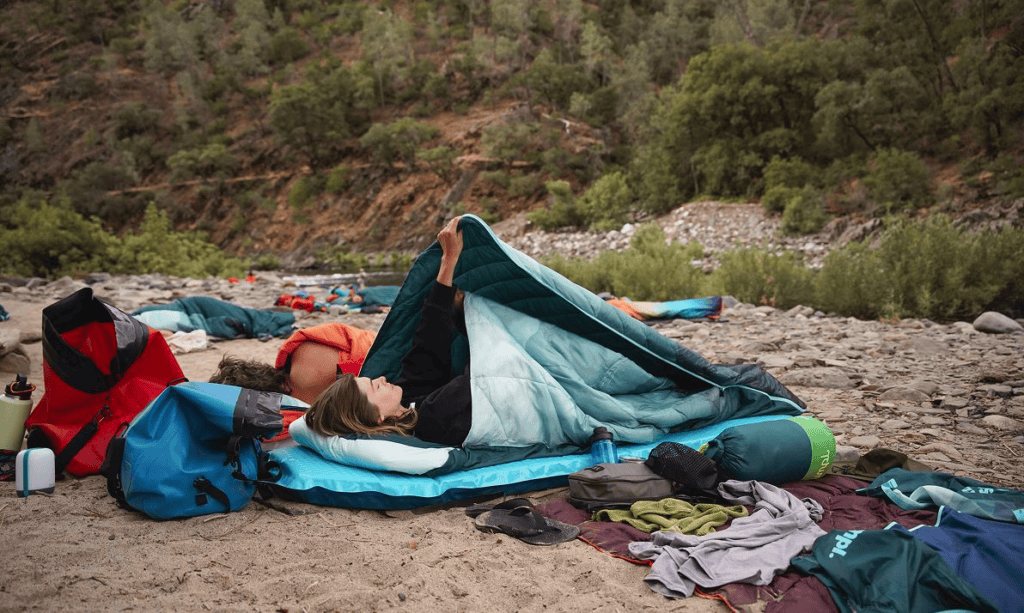
Instead of a single sealed tube, it uses what Rumpl calls WrapAdapt™—three different wrapping configurations, so you set how enclosed (or not) you want to be. Cinch it up like a bag when it’s cold, or open it out and use it more like a layered blanket when you want freedom to move. A full two-way zipper panel lets you vent, stick a foot out, or drape it rather than commit to being sealed in.

For someone who feels trapped, that optionality is everything. It means the sleeper is in control of the enclosure instead of the bag dictating it. That’s the difference between “I’ll just use sheets” and “I actually slept.”

The Real-World Test: The Rockies

Here’s the part that sold us. A cold night at Rocky Mountain elevation is a real test—it’s the exact scenario where my wife would normally shiver under a blanket and wish she’d stayed home.

With the Wrap Sack, she slept comfortably. She could wrap in for warmth when the temperature dropped, then loosen it when she got warm, without the trapped feeling that had ruined every previous attempt. For someone who genuinely doesn’t like sleeping bags, sleeping well in one—at altitude, on a school-trip cot, no less—is about the strongest endorsement this product could get.

The Warmth Is Legit

None of that flexibility matters if you freeze, so credit where it’s due: the Wrap Sack is genuinely warm.

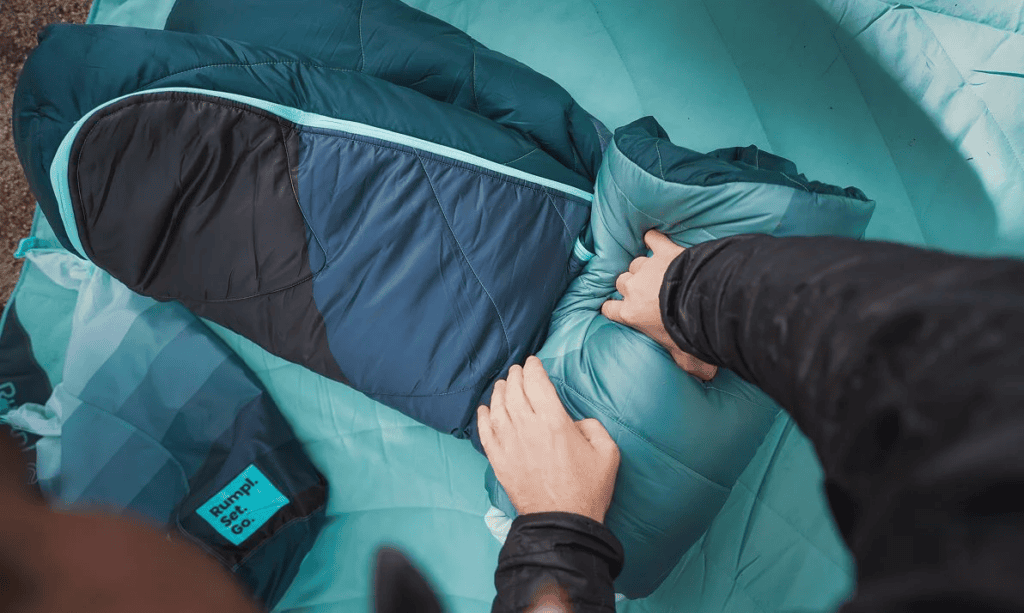
It’s a layered, two-part system—a RenewaLoft™ shell bag plus a NanoLoft® blanket liner. Used together, it’s rated to a 30°F comfort / 20°F limit; split apart into a single layer, it’s a 45°F comfort / 35°F warm-weather setup. That range makes it a legitimate three-season option rather than a fair-weather gimmick, and the two-piece design means you’re not hauling more bag than the night calls for.

The NanoLoft® fill is a synthetic down alternative, so unlike real down it keeps insulating even if it picks up moisture from tent condensation or morning dew—reassuring in the damp, unpredictable conditions the mountains like to serve up.

The Thoughtful Extras

A few details round it out:

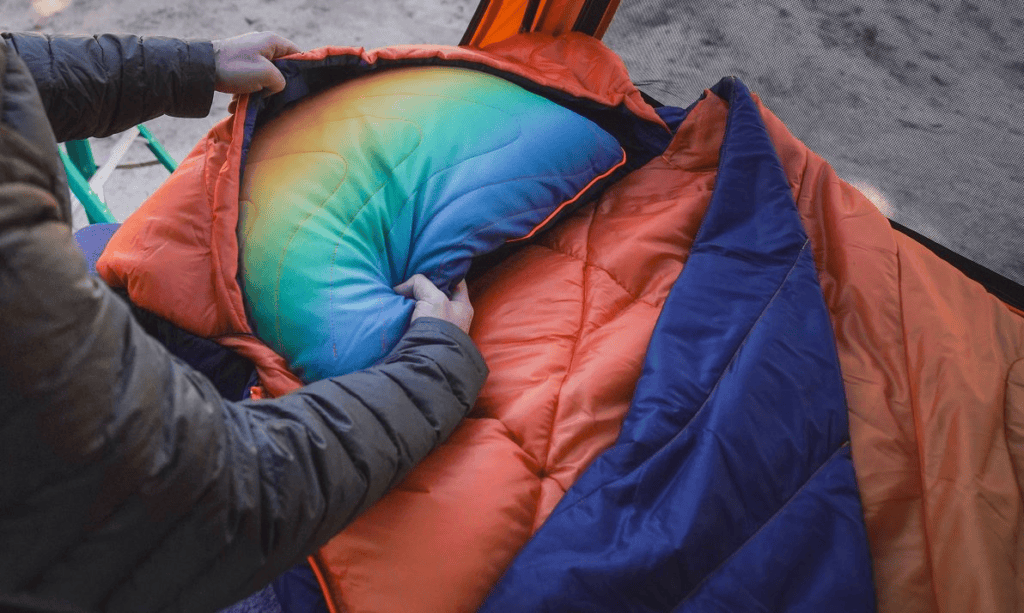
  • Pillow pocket hood: a sleeve that holds a Rumpl Camp Pillow so it doesn’t wander off your pad at 2 a.m.
  • Cape Clip® connections: secure the layers together, or wear the blanket around your shoulders around the campfire before bed.
  • Machine washable: it cleans up in a front-load washer, which matters for a bag that gets hauled on school trips and family weekends.
  • Roll-top stuff sack included: packs down for transport, though at 5 lbs this is a car-camping and basecamp bag, not an ultralight backpacking piece.
  • Made from recycled materials: the whole thing is built from post-consumer recycled polyester—155 plastic bottles’ worth per bag.

A Few Honest Notes

At $249.95 it’s priced as a premium bag, but for something that finally solved a years-long problem in our house, it earned it.

Two things to be clear about. First, weight: at 5 lbs, this is not a backpacking bag. It’s made for car camping, family trips, and basecamp, where you’re not carrying it far. Second, the star feature is really about sleep preference—if you already love a snug mummy bag, you may not need the Wrap Sack’s flexibility. But if you (or your partner) have ever tapped out of camping because sleeping bags feel like a trap, this is the one to try.

The Verdict

The Rumpl Wrap Sack 20 did something no other sleeping bag has managed: it got a committed sleeping-bag hater to sleep comfortably outside, on a cold Rocky Mountain night, without feeling trapped. The blanket-style WrapAdapt™ design, the genuine warmth of the two-layer system, and the small thoughtful touches make it a standout for family and car camping.

It’s not for ultralight missions, and dedicated mummy-bag fans may not need it. But for restless sleepers, warm sleepers, and anyone who’s ever felt caged by a zipper, the Wrap Sack is the rare piece of gear that changes whether someone wants to camp at all. In our house, it already has.

Technical Specs at a Glance

Rumpl Wrap Sack 20

  • Temperature rating: Two layers: 30°F comfort / 20°F limit · One layer: 45°F comfort / 35°F limit
  • Design: WrapAdapt™ blanket-style system, three wrapping configurations, full two-way zip panel
  • Insulation: RenewaLoft™ shell + NanoLoft® synthetic down-alternative blanket liner (100% recycled polyester)
  • Shell: VersaWeave™ 30D recycled ripstop polyester, PFAS-free water-repellent finish
  • Weight: 5 lbs
  • Flat dimensions: 35″ x 82″ (tapers 35″ to 32″)
  • Fits: Users up to 6’2″
  • Features: Pillow pocket hood, Cape Clip® connections, roll-top stuff sack, machine washable (front-load)
  • Sustainability: Made from ~155 recycled plastic bottles
  • Price: $249.95

Saddleback Leather Little Toiletry Bag Review: Glamping and Globetrotting, Not Backpacking

Most gear we test is trying to be lighter. This one isn’t even in the conversation.

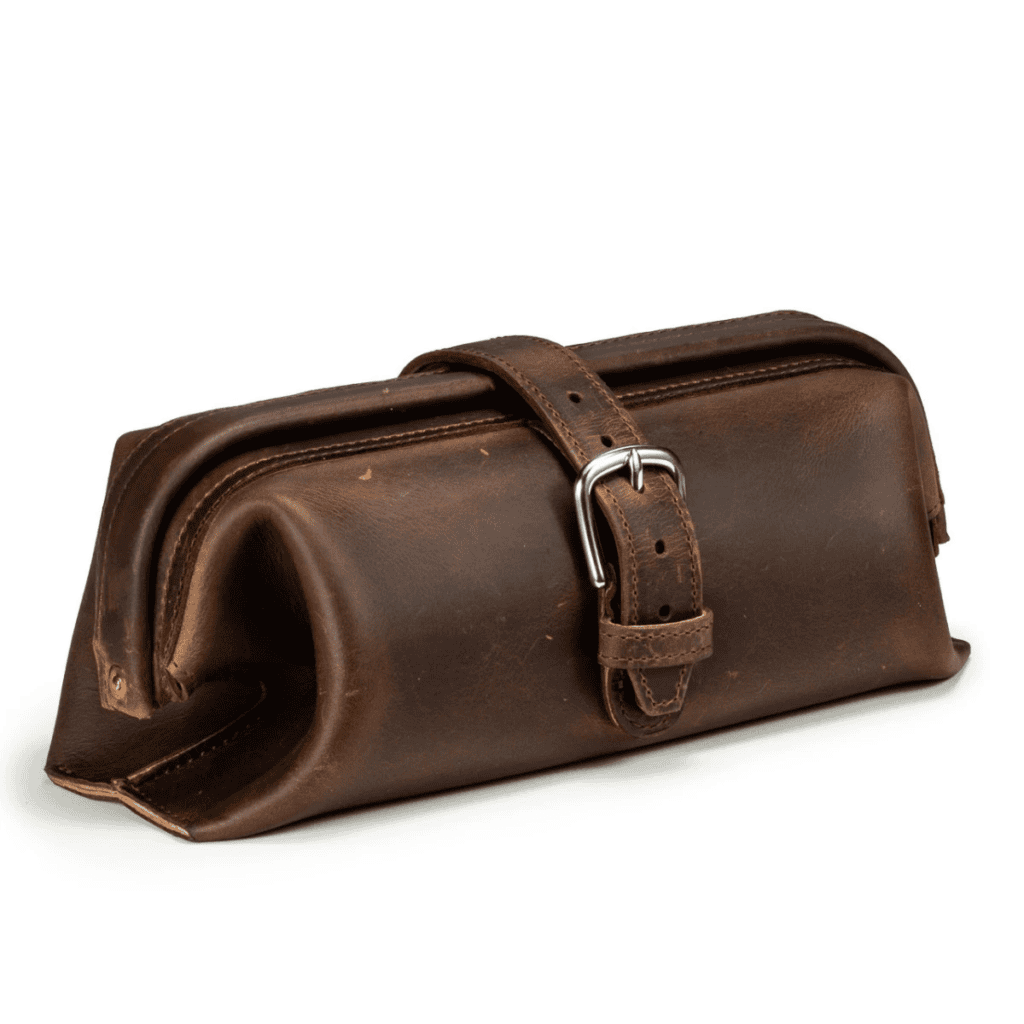
The Saddleback Leather Little Toiletry Bag is a two-pound slab of full-grain leather built to last a hundred years—literally, that’s the warranty. It’s the opposite of the ultralight philosophy that dominates most outdoor gear, and reviewing it means being honest about where that makes sense and where it absolutely doesn’t.

So let’s get the disqualifier out of the way first, then talk about where this thing genuinely shines.

Let’s Be Clear: This Is Not a Backpacking Bag

If you count grams, stop reading. This is not your dopp kit for a lite camping trip.

At roughly 10.5 x 4 x 3.5 inches and a full two pounds empty, the Little Toiletry Bag is bulky and heavy by any backcountry standard. Two pounds is a chunk of your pack weight budget spent before you’ve added a single item—and it’s leather, so it doesn’t compress, roll, or squish into a gap the way a nylon pouch does. For anyone hiking in, bikepacking, or watching ounces, this is simply the wrong tool. A $15 silnylon ditty bag will beat it every time on the metric that matters out there.

That’s not a knock on the bag. It’s just not what it’s for.

Where It Belongs: The Glamping Vibe

Now picture a different kind of trip. You’re car camping or setting up at a well-appointed site. There’s a canvas tent, maybe a cot, a proper camp kitchen, and you’re staying more than one night. Weight is irrelevant because nothing’s going on your back.

That’s where the Little Toiletry Bag earns its keep. When you’re not carrying it up a mountain, everything that made it a liability becomes a feature. The full-grain leather looks and feels like a piece of heirloom kit, not disposable gear. It sits open on a camp table and stays put. It shrugs off the rough handling of being tossed in and out of a truck bed. And the water-resistant grain leather takes dew, spills, and the occasional rain splatter in stride.

It’s the difference between surviving a trip and enjoying one. For the glamping and basecamp crowd, this is a bag that makes the whole setup feel intentional.

Where It Truly Shines: Travel Abroad

Here’s the use case that justifies the whole thing. For international travel, the Little Toiletry Bag is close to perfect.

The reason is exactly the durability that sinks it for backpacking. When you’re packing for a trip abroad, your toiletry kit gets jammed into a carry-on, wedged into an overhead bin, and crushed under whatever the person three rows back decided to bring. A soft pouch surrenders; your shampoo ends up flattened and your bag comes out misshapen. This thing doesn’t care. The rigid full-grain leather construction holds its shape and protects what’s inside—it won’t get crushed in an overhead bin, and it won’t split a seam when a gate agent forces the bin shut.

The build backs that up at every point:

  • One solid piece of leather, minimal seams: fewer seams means fewer failure points. It’s built to not break.
  • Pigskin lining: tougher than cowhide lining, so the inside survives the leaks and spills that eventually ruin fabric kits.
  • 316 stainless steel hardware: marine-grade, corrosion-resistant metal on the closure—the kind of spec that matters when it’s the only moving part.
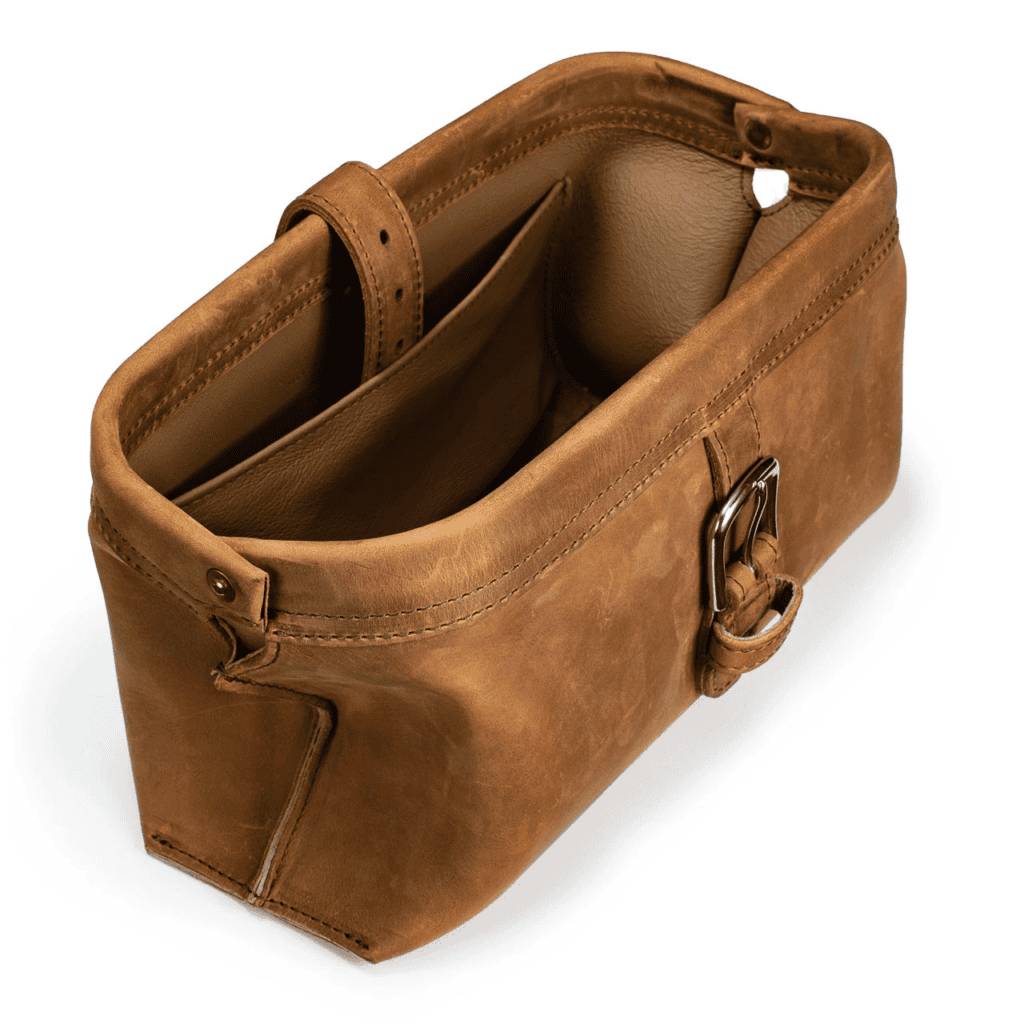
  • Buckle closure, no zipper: there’s no zipper to blow out at the worst possible moment. A simple strap-and-buckle Gladstone closure means nothing to jam, snag, or fail. It’s a deliberate “no breakable parts” design.

For a bag you check, carry on, and drag through six airports, “no breakable parts” isn’t marketing—it’s the whole point.

Living With It

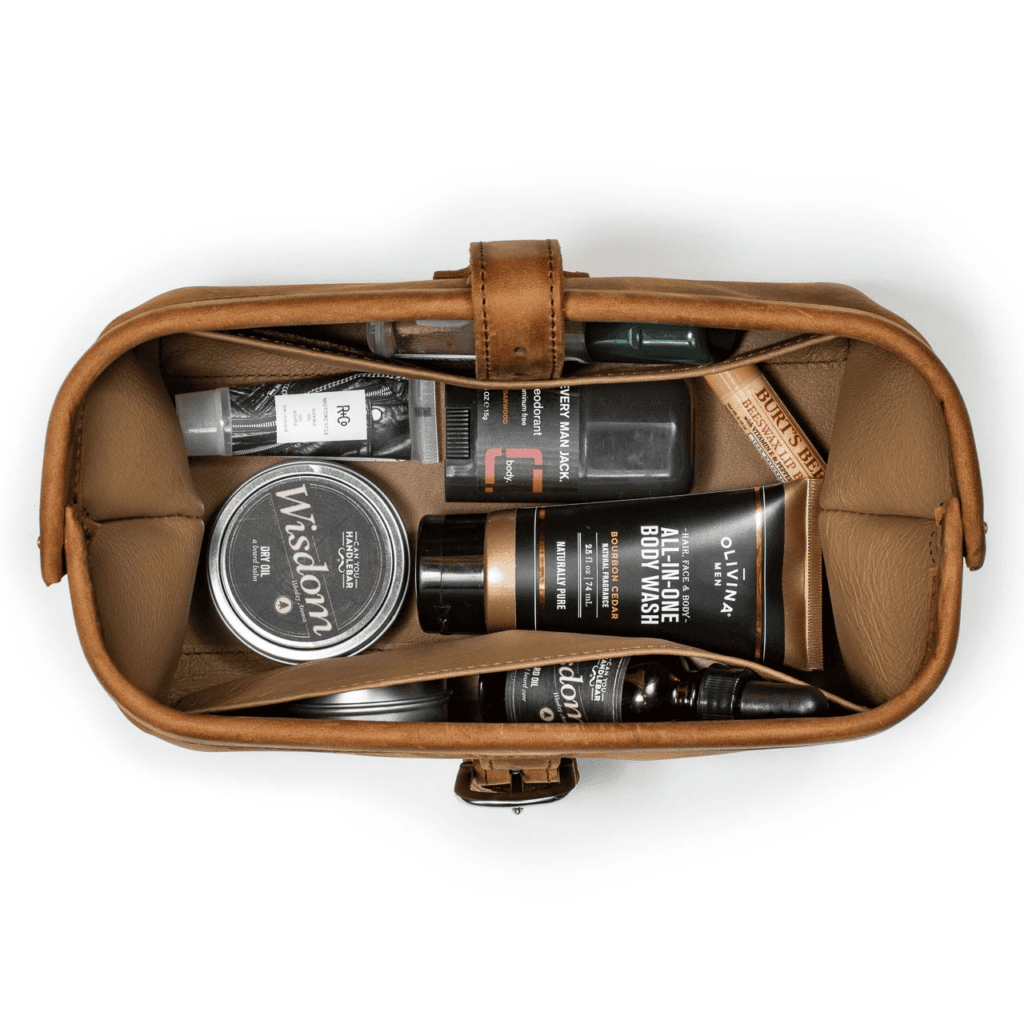
Two interior pockets keep the small stuff sorted, and the wide mouth opens up for easy access to everything inside—no fishing blind through a narrow zipper gap. It holds a genuinely full kit: the essentials plus the extras you actually bring on a longer trip.

A word on the leather itself. Full-grain isn’t finished to hide wear; it develops a patina, picking up character with every trip. Some people will love that a scuff from a cobblestone street in Lisbon becomes part of the bag’s story. If you want something that looks factory-fresh forever, this isn’t it—and that’s rather the point.

The 100-year warranty deserves a mention too. It’s not a gimmick so much as a statement of intent: Saddleback builds this to be handed down, not replaced. Amortized over decades, $169 stops looking like a splurge on a toiletry bag and starts looking like the last one you’ll buy.

The Verdict

The Saddleback Leather Little Toiletry Bag is a buy-it-for-life piece that knows exactly what it is—as long as you know it too.

For lightweight or backcountry camping, skip it without hesitation. Two pounds of non-compressible leather has no business in a pack you carry on your back. But for glamping, car camping, and basecamp trips where weight doesn’t matter, it turns a toiletry kit into a piece of gear you’re glad to own. And for travel abroad, it’s genuinely excellent—crush-proof, weather-resistant, and built with no parts that can fail when you’re a long way from home.

Match it to the right trip and it’s one of the best pieces of kit you’ll pack. Bring it on the wrong one and you’ll feel every ounce. Just know which trip you’re taking.

Technical Specs at a Glance

Saddleback Leather Little Toiletry Bag

  • Dimensions: 10.5″ W x 4″ H x 3.5″ D
  • Weight: 2 lbs (empty)
  • Exterior: Full-grain leather (water-resistant grain), ages to a patina
  • Lining: Pigskin (tougher than cowhide)
  • Hardware: 316 marine-grade stainless steel; strap-and-buckle Gladstone closure (no zipper)
  • Construction: One solid piece of leather, minimal seams, marine-grade polyester thread
  • Interior: Two pockets, wide-mouth opening
  • Colors: Black, dark brown, tan/English tan, reddish-brown
  • Warranty: 100-year warranty (30-day returns)
  • Price: $169.00

Peak Design City Sling 2L Review: The Everyday Carry, Distilled

Some days you don’t need a backpack. You need a pocket you can wear.

There’s a category of outing that falls between “empty pockets” and “full pack”—a coffee run, a farmers market, a walk downtown, a travel day where your phone, wallet, and keys keep migrating between hands. For that in-between, the Peak Design City Sling 2L is about as good as it gets.

If you read our Peak Design City Backpack review, this is the little sibling that runs the same playbook—Peak Design’s obsessive organization—shrunk down to a grab-and-go essential. I’ve been carrying the 2L in Black, and it’s earned a spot by the door.

Small on Purpose

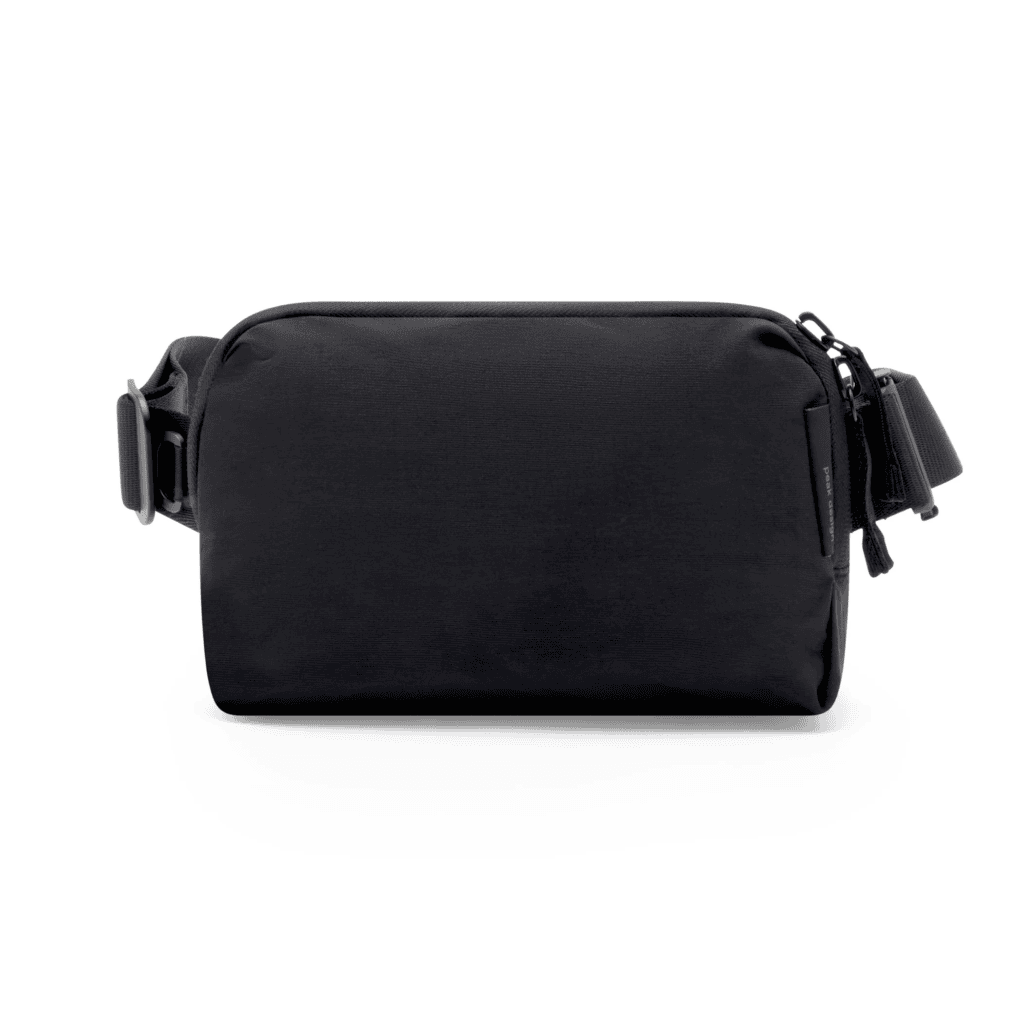
The whole point of the City Sling is restraint. At just 5.5 x 8.8 x 2.3 inches and under 7 ounces empty, it’s “designed for moments when you want to move freely and carry only what matters most”—and it delivers exactly that.

The 2L size is the minimalist pick (there’s a larger option if you want more room). It’s built to hold the essentials—phone, wallet, keys, sunglasses, a portable charger, maybe a small notebook or a snack—and not much more. That’s the feature, not a limitation. When you don’t want to think about a bag, this one disappears against your body in a low-profile shape that sits close and stays out of the way.

The build is pure Peak Design: MonoShell™ 660D recycled, bluesign®-approved crinkle nylon, YKK zippers, aluminum adjusters, and a PFAS-free DWR coating that beads off rain instead of soaking it up. In black, it reads clean and understated—equally at home over a jacket downtown or slung across your chest in an airport.

Organization Way Beyond Its Size

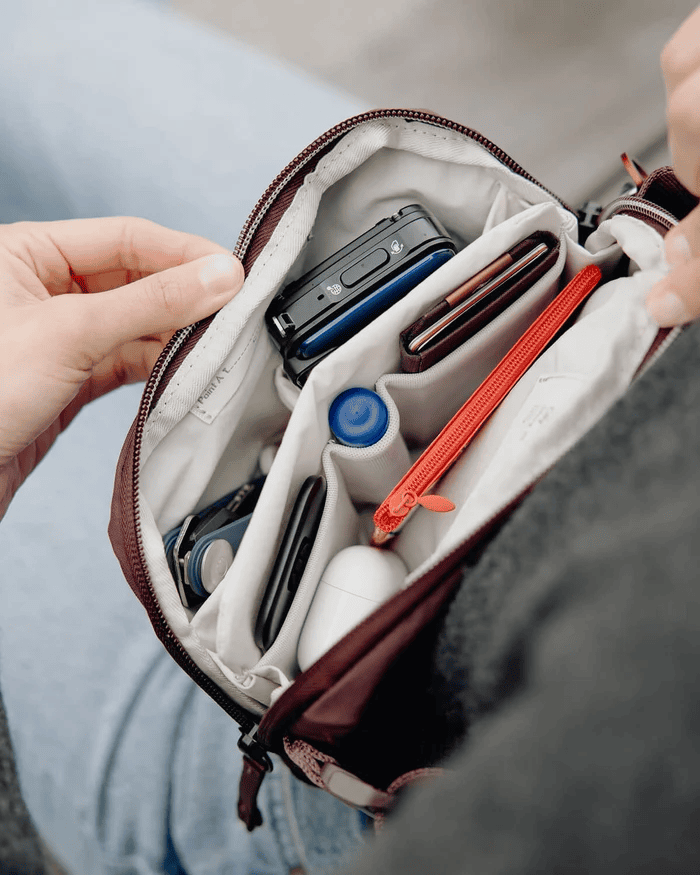
This is where the City Sling separates itself from every generic sling on the shelf. For a 2-liter bag, the internal layout is almost absurdly thoughtful.

  • Magnetic rear phone pocket with charging pass-through: your phone gets its own dedicated, quick-access slot against your back, and you can run a cable to a battery inside while it sits there. Standard and mini phones fit cleanly; very large phones may not fully close over the pocket.
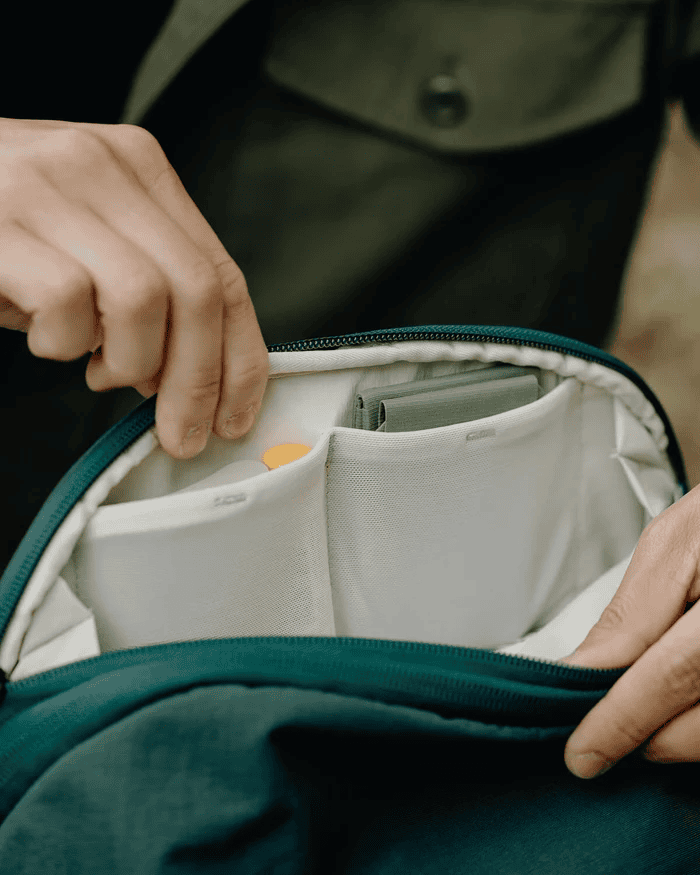
  • Floating divider with three stretchy pockets: two wider slots and a narrow center one keep small items sorted instead of pooling at the bottom.
  • Two front pockets with a key leash: the built-in tether means your keys are always clipped and findable—no fishing around.
  • Hidden AirTag® pocket: a discreet slot for a tracker, which is reassuring for a bag this easy to set down and walk away from.

For something you can wear without noticing, it has no business being this organized—and that’s exactly why it works.

The Wearing Experience

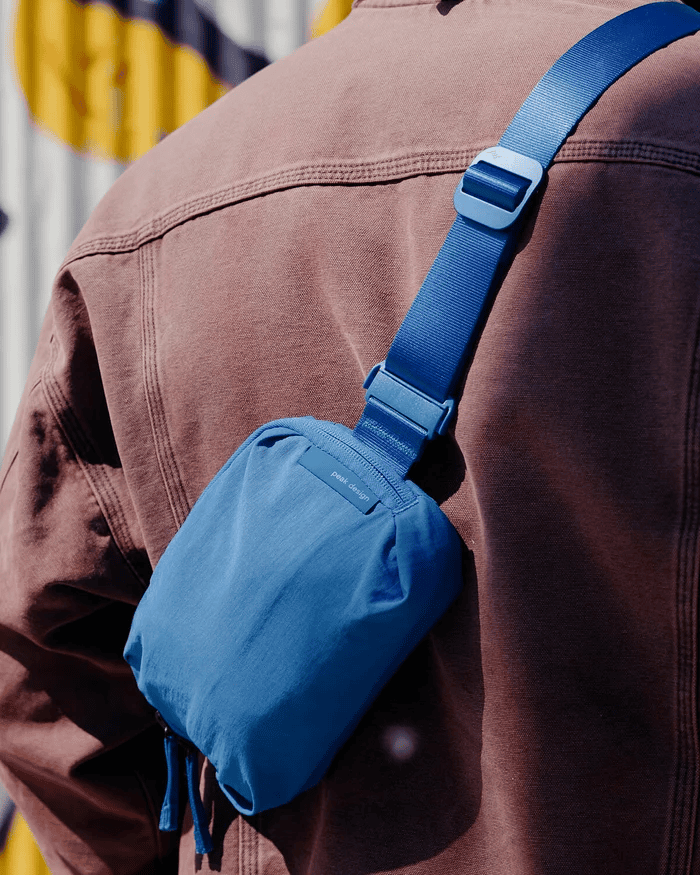
The City Sling is a crossbody first. The quick-adjust strap cinches down or lets out in one motion, so you can swing it from your back to your front for access and back again without breaking stride. A quick-release clip makes taking it on and off painless.

It can also ride as a waist pack, though that’s the compromise mode: because the straps exit from the sides, it hangs a little looser on the chest than a bag with a top-centered strap would. As a crossbody—its intended job—it sits close and secure. Worth knowing which position you’re buying it for.

Who It’s For

The City Sling isn’t trying to be your work bag or your travel hauler. It’s the thing you grab when you want your hands free and your essentials on you—and nothing more.

It pairs naturally with a bigger bag, too. On travel days it makes a great personal item or “day-of” carry that lives inside or alongside a larger pack, so your phone, passport, and wallet stay on your body while the rest rides in the City Backpack. Between the two, most of your carry needs are covered.

A Few Honest Notes

At $69.95, it’s priced like a premium accessory, and for a 2L sling that’s a real number. But the lifetime warranty and Peak Design’s build quality make it a buy-once piece, and the organization genuinely justifies the step up over a basic sling.

The main thing to be clear-eyed about is size. Two liters is deliberately minimal—if you routinely carry a tablet, a water bottle, or more than the essentials, you’ll want the larger size or a different bag. Match the volume to how you actually pack.

The Verdict

The Peak Design City Sling 2L nails the hardest thing about a minimalist bag: staying small without feeling limiting. The magnetic phone pocket, key leash, AirTag slot, and floating divider pack more usable organization into two liters than most bags manage in ten. It wears comfortably as a crossbody, shrugs off weather, and looks sharp doing it.

If you want one refined, grab-and-go carry for the days a backpack is overkill—or a smart companion piece to a bigger bag on travel days—this is an easy recommendation. It’s the everyday carry, distilled.

Technical Specs at a Glance

Peak Design City Sling 2L

  • Capacity: 2L (larger size also available)
  • Dimensions: 5.5 x 8.8 x 2.3 in (14 x 22.4 x 5.8 cm)
  • Weight: 6.85 oz (~194 g)
  • Shell: MonoShell™ 660D recycled, bluesign®-approved crinkle nylon
  • Weather resistance: PFAS-free DWR (water-resistant)
  • Hardware: YKK zippers, aluminum adjusters, Duraflex buckles
  • Carry: Crossbody sling (also wearable as a waist pack); quick-adjust strap, quick-release clip
  • Organization: Magnetic rear phone pocket with charging pass-through, floating divider with three stretch pockets, two front pockets with key leash, hidden AirTag® pocket
  • Colors: Black, Cypress, Eclipse, Lapis, Moon, Stone
  • Warranty: Lifetime
  • Price: $69.95

Peak Design City Backpack 22L Review: The Work Pack That Does It All

Not every pack we test is built for a mountain. Some are built for a Tuesday.

Most of what we cover at Huck is gear for the trail, the campsite, or the crag. But the bag you actually reach for most isn’t the one that hauls camera gear up a fourteener—it’s the one that gets you to work, to the gym, and back home without a second thought. That’s a different job, and it’s a job the Peak Design City Backpack 22L is built to do.

If you already read our Peak Design Outdoor Backpack 25L review, you know the brand’s obsession with clever organization. The City Backpack takes that same DNA and points it at the daily grind. I’ve been running the 22L in Cypress as my everyday work pack, and it’s quietly become the one I grab without thinking.

Built for the Commute, Not the Summit

The City Backpack makes no pretense of being a hauler. It’s a refined, softer-structured pack “built for people who move through the city with intention”—and in daily use, that focus pays off.

The 22L size is the sweet spot for a work pack. It’s big enough to swallow a full day’s worth of stuff without turning into a duffel, and slim enough (just 21.3 x 16.9 inches, a hair over two pounds) that it never feels bulky on a shoulder or crammed under a desk. The MonoShell™ 660D recycled nylon shell has a clean, crinkled matte finish that looks at home in an office in a way most technical packs don’t. Cypress is an understated muted green that reads professional without being boring.

Peak Design’s build quality carries over intact: bluesign®-approved recycled fabrics, recycled aluminum hardware, beefy #8 YKK zippers, and a PFAS-free DWR coating for water resistance. It’s not fully waterproof, but it shrugs off the kind of surprise rain or snow that a Colorado morning likes to throw at you.

The Laptop Setup Is the Real Win

For a work pack, this is what matters most, and it’s where the City Backpack shines.

The padded laptop compartment fits up to a 16″ laptop and is elevated off the bottom of the bag, so a drop onto pavement doesn’t transmit straight to your machine—a small design choice that matters the first time you set the bag down hard. There’s a dedicated tablet sleeve alongside it that takes up to a 14″ tablet. My laptop, charger, and the daily pile of cables, notebook, and odds and ends all disappear inside without a fight.

The main compartment opens wide with a U-zip, so you’re not digging through a top-loading tube to find anything. Everything is visible and reachable, which is exactly what you want when you’re grabbing your laptop at a security line or pulling a charger mid-meeting.

Organization That Actually Thinks Like You Do

This is the part Peak Design nails better than almost anyone.

  • Quick-access top pocket with a key tether: the EDC pocket in the top panel is where your phone, wallet, and keys live. The built-in key leash means I’ve stopped losing keys to the bottom of the bag entirely.
  • Hidden AirTag® pocket: a discreet slot for a tracker. For a bag that travels and gets set down in a lot of public places, it’s genuinely reassuring.
  • Front stash pocket: a zip pocket up front for the stuff you grab constantly—transit card, sunglasses, a snack.
  • Two side pockets: each fits a water bottle up to 24 oz, so hydration doesn’t eat into your main compartment.
  • Luggage pass-through: slides over a roller handle, which turns this from a work pack into a travel pack the second you head to the airport.

None of it is gimmicky. Every pocket is where your hand expects it to be, which is the whole point of good daily carry.

The Gym-Clothes Test

Here’s the use case that sold me. On gym days, I stash a full set of workout clothes in the main compartment alongside my laptop and everyday gear—and the 22L handles it without complaint.

That’s the quiet superpower of this pack: it’s got enough room to absorb a second mission (gym, groceries, a change of clothes) on top of the work-carry baseline, but it doesn’t look or feel oversized on the days you’re just running laptop-and-lunch. It flexes to the day instead of forcing the day to fit it.

A Few Honest Notes

At $199.95, it’s a premium pack, and there’s no getting around that. But Peak Design’s lifetime warranty and the genuinely durable construction make it more of a buy-once proposition than most bags in this range.

And to be clear about what it is: this is a commuter and travel pack, not a backcountry hauler. If you want something for hauling camera gear up a trail, the Outdoor Backpack is the better call. The City Backpack is for the other 90% of your week.

The Verdict

The Peak Design City Backpack 22L is the pack I reach for every working day, and that’s the highest praise I can give a bag. It carries a 16″ laptop with care, organizes a full day’s everyday carry intuitively, swallows a set of gym clothes when I need it to, and looks sharp doing all of it. The luggage pass-through means it moonlights as a travel bag without missing a beat.

It’s not cheap, and it’s not built for the mountains. But if you’re looking for one refined, do-it-all pack for work, the gym, and the occasional trip, this is an easy one to recommend. Mine’s not going anywhere.

Technical Specs at a Glance

Peak Design City Backpack 22L

Price: $199.95

Capacity: 22L (also available in 15L)

Laptop: Fits up to 16″; elevated, padded compartment

Tablet: Dedicated sleeve fits up to 14″

Dimensions: 21.3 x 16.9 in

Weight: ~2 lbs

Shell: MonoShell™ 660D 100% recycled, bluesign®-approved crinkle nylon

Weather resistance: PFAS-free DWR (water-resistant, not waterproof)

Hardware: Recycled aluminum; #8 YKK zippers

Key features: Wide U-zip main opening, top EDC pocket with key tether, hidden AirTag® pocket, front stash pocket, two 24 oz side pockets, luggage pass-through

Colors: Black, Cypress, Eclipse, Lapis, Moon, Stone

Warranty: Lifetime

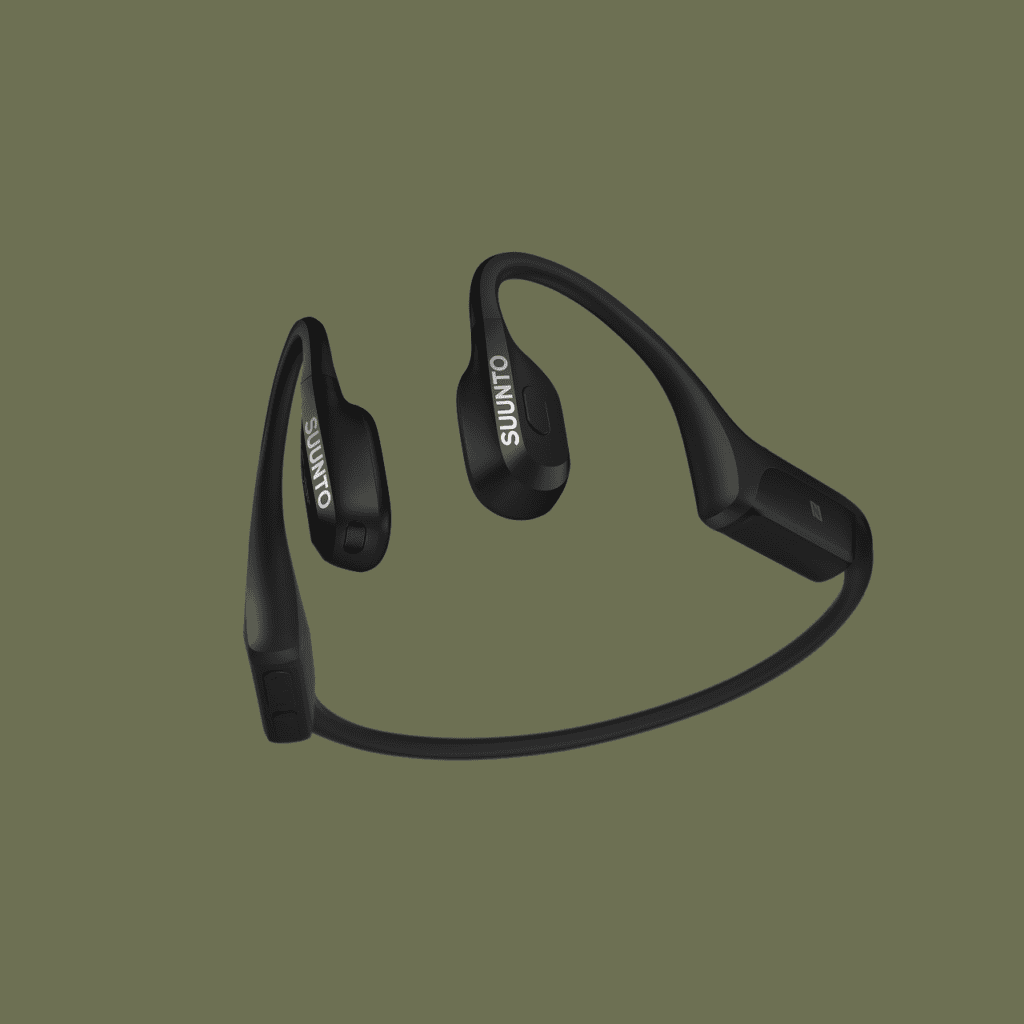
Suunto Wing 2 Review: Big on Features, Short on Sound

Open-ear headphones solve a real problem. When you run roads at dawn or ride with traffic, sealing your ears off with buds is a genuine safety risk. You want your music and the sound of the truck coming up behind you. That’s the whole pitch for bone-conduction sets like the Suunto Wing 2—stay motivated, stay aware.

On paper, the Wing 2 is loaded. In practice, I kept running into the one thing a pair of headphones can’t afford to get wrong: the sound.

I wanted to like these. Here’s what I actually found.

What Suunto Promises

Credit where it’s due—the Wing 2’s feature list is impressive, and most of it delivers.

  • Build and weather resistance: a 35g titanium frame with an IP66 rating that shrugs off sweat, rain, and dust. It feels genuinely rugged.
  • Battery: up to 12 hours on the headphones, plus a bundled powerbank case that pushes total playtime to around 36 hours, with a 5-minute fast charge for topping off.
  • Safety LEDs: motion-reactive lights that pulse with your cadence and flash when you check for traffic—a smart, thoughtful touch for low-light miles.
  • Wind-resistant mic: dual microphones tuned to cut wind noise for calls up to 30 km/h.
  • App and watch integration: EQ tuning in the Suunto app, plus text-to-speech metrics piped in from a Suunto watch.

This is a well-engineered piece of hardware. The problem isn’t the spec sheet. It’s what happens when you press play.

The Problem You Can Hear

In their natural resting position, the Wing 2 sounds tinny. Thin, hollow, and quiet enough that I found myself cranking the volume to maximum just to follow along—and even then, the audio never filled out.

Then I stumbled onto the fix, and it tells the whole story. When I pulled my hair back and let the headphones rest on my ponytail, then tilted them toward my ears, the sound noticeably improved. More body, more clarity, less strain to hear.

That’s diagnostic. Bone-conduction audio lives and dies on contact and placement—the transducers have to sit right against the cheekbones to transfer sound efficiently. In their default position on my head, they simply weren’t seating well, and the audio suffered for it. Nudge them into better contact and the sound comes up.

Two honest takeaways from that. First: the sound quality is fixable, but only by fussing with placement, which is not something you want to be doing mid-run. Second—and in fairness to Suunto—fit like this is partly a function of head shape and hairstyle, so your experience may land differently than mine. But a pair of headphones that only sounds good when you fight them into position is asking a lot.

Head to Head: Suunto Wing 2 vs. Shokz OpenRun Pro 2

The clearest way to judge a pair of headphones is against a known quantity. I put the Wing 2 up against the Shokz OpenRun Pro 2, which we’ve already reviewed and liked.

It wasn’t close. The Shokz sounded noticeably crisper and fuller straight out of the box—no placement gymnastics required. That gap held across both music and spoken word. On podcasts and audiobooks, where clarity of the human voice is everything, the Wing 2’s thinner profile made voices harder to track, while the Shokz stayed clean and present. For music, the Shokz simply had more there there.

If sound quality is your top priority in this category, the comparison is hard to argue with.

How They Held Up, Use Case by Use Case

Open-ear headphones get tested by the noise around you, so I ran them through four very different environments.

  • Running outdoors: This is the best-case scenario, and where the Wing 2 is most usable. In quiet air, at a decent volume, the sound is acceptable and the situational awareness is excellent—you hear everything around you, which is the entire point.
  • Treadmill: The rhythmic pounding of a treadmill competes directly with open-ear audio, and here the Wing 2’s thin sound got swallowed. I was back to max volume and still straining.
  • Cycling: Wind noise is the enemy of open-ear sound, and riding at speed, the audio struggled to stay above it. The wind-cutting mic is for calls, not playback, so the music took the hit.
  • Rogue Echo Bike: An air bike’s fan is a wall of white noise, and it flatly overpowered the Wing 2. Indoor efforts on the Echo were the toughest test, and the headphones lost.

The pattern is consistent: the louder the environment, the more the Wing 2’s underpowered sound gets exposed. Open-ear designs always give up some ground to ambient noise—that’s the tradeoff for awareness—but the Wing 2 gives up more than it should.

What They Get Right

This isn’t a total write-off. The build quality is excellent, the IP66 durability is real, the battery-plus-powerbank setup is among the best in the category, and the safety LEDs are a legitimately good idea for anyone logging dark-morning miles. If your priorities are ruggedness, runtime, and visibility over pure audio fidelity, there’s a real case here.

But most people buying headphones are buying them, first and foremost, to listen.

The Verdict

The Suunto Wing 2 is a well-built, feature-rich pair of open-ear headphones let down by the thing that matters most. In their natural position they sound tinny and demand full volume, and only careful placement brings the audio up to par. Head to head, the Shokz OpenRun Pro 2 outperformed them on both music and spoken word without any fuss.

If you want the rugged build, the long battery life, and the motion-reactive safety lights, and you’re willing to dial in the fit, the Wing 2 has genuine strengths. But if crisp, effortless sound is what you’re after—especially in noisy environments like a treadmill, a windy ride, or next to a roaring air bike—there are better options in this category. For most runners and riders, I’d point them to the Shokz first.

Technical Specs at a Glance

Suunto Wing 2

  • Type: Open-ear bone-conduction headphones
  • Weight: 35g titanium build
  • Water/dust resistance: IP66
  • Battery: Up to 12 hours; ~36 hours total with included powerbank; 5-minute fast charge
  • Operating range: -20 to 60°C
  • Mic: Dual microphone with wind-noise reduction up to 30 km/h
  • Safety: Motion-reactive LED lights (running & cycling modes)
  • App: Suunto app EQ tuning; text-to-speech metrics with a paired Suunto watch