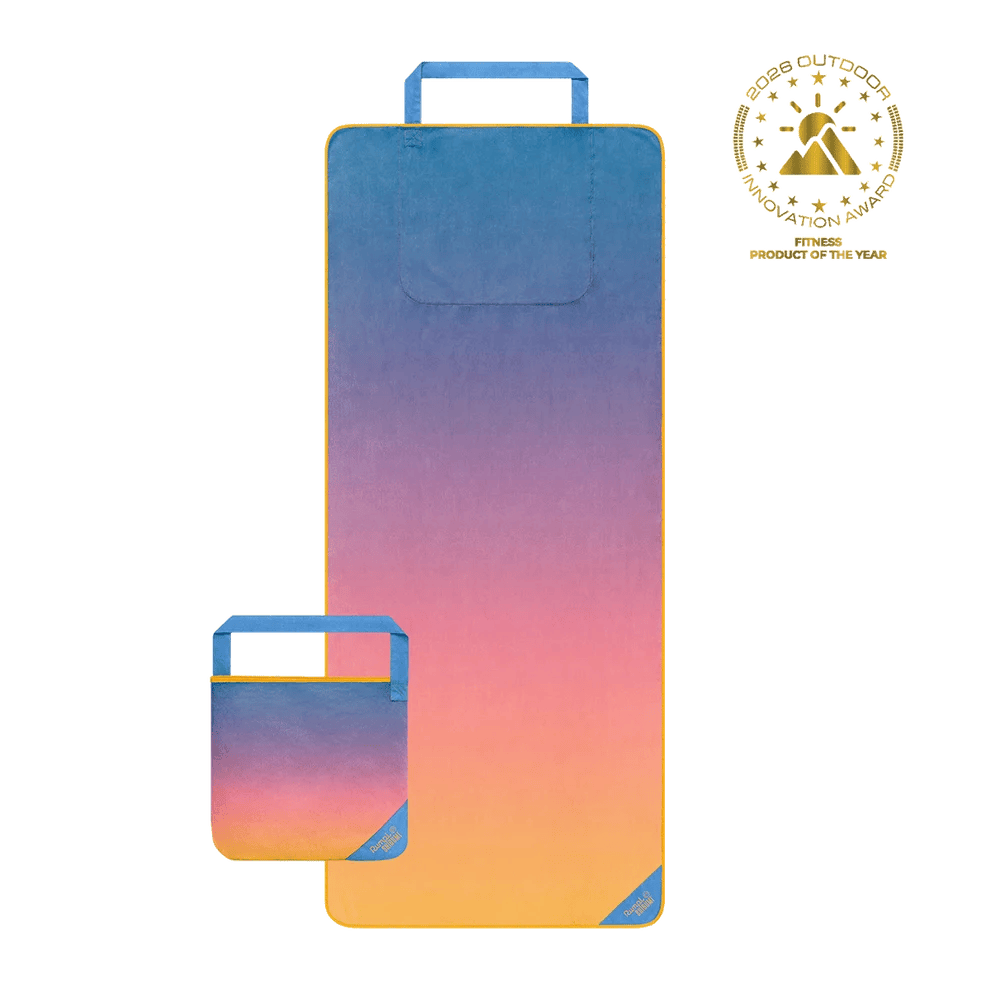
The humble towel doesn’t get much thought—until you’re juggling one along with everything else you’re trying to carry.
You know the walk. From the campsite to the bathhouse, arms full: towel draped over one shoulder, toiletries in one hand, dry clothes tucked under an elbow, flip-flops threatening to escape. Or the beach version, hauling the towel plus sunscreen, keys, and a phone across hot sand. The Rumpl Tech Towel Tote fixes that in a way that’s almost embarrassingly obvious once you’ve used it: it’s a towel that turns into a bag.
The Two-in-One Trick
Here’s the whole idea. Most of the time it’s a large, quick-drying towel. But it converts into a tote bag—so the thing you dry off with is also the thing you carry everything in.
That flips the usual routine. Load your soap, shampoo, and clean clothes into the tote, sling it over your shoulder, and walk to the showers hands-free. Once you’re there, unfold it back into a towel and dry off. No separate shower caddy, no armful of loose gear, no plastic bag doing double duty. One piece of kit covers the whole trip there and back.
It sounds like a small thing. It is not a small thing the third time you make that walk in a weekend.
Perfect for the Campground Bathhouse
This is the use case that won me over. Anyone who’s done a few nights at a developed campground knows the bathhouse shuffle—the trek across the loop to the showers with everything you need balanced precariously in your arms.
With the Tech Towel Tote, that walk gets civilized. Everything goes in the tote, you walk over hands-free, and there’s a paracord hanging loop so you can hang it on a hook inside the shower stall instead of searching for a dry spot to set your stuff down (there never is one). There’s also an integrated stash pocket with a paracord key loop, so your car key or campsite key stays clipped and secure while you shower rather than sitting in a puddle. Small details, but they’re exactly the details that matter in a wet, cramped bathhouse.
And the Beach
The same logic makes it a natural for beach and pool days.
Pack your essentials into the tote for the walk from the car, spread it out as a towel when you arrive, then load everything back up when it’s time to go—no sand-covered pile of belongings to gather. The Nanotex® cooling finish helps with temperature regulation when you’re lying out in the sun, and the fabric absorbs up to 4x its weight in water, so it actually dries you off rather than just smearing the water around like a thin travel towel.
For anyone who packs light for trips abroad or road trips, it earns its place there too: one item that’s a towel, a beach mat, and a tote all at once is exactly the kind of multi-tasker you want when space is tight.
The Practical Details
Rumpl clearly designed this for real, damp, sandy use:
Quick-drying and absorbent: the recycled poly-spandex blend soaks up 4x its weight in water and dries fast, so it’s not still soggy the next morning.
Antimicrobial treatment: resists the funky mildew smell that plagues towels left balled up in a bag or trunk—key for a towel that lives through a whole trip.
Two sizes: a Single (30″ x 72″, 1.2 lbs) for one person, and a Double (50″ x 72″, 1.8 lbs) big enough to share or use as a beach blanket.
Machine washable: hang dry or tumble on low. Easy care for gear that gets abused.
Sustainably made: primarily post-consumer recycled polyester, from a B Corp– and Climate Label–certified brand.
The Shibumi Fade colorway is a limited-edition Rumpl x Shibumi collaboration, so the look is a step up from a plain gym towel—it reads more “designed beach piece” than “afterthought.”
A Few Honest Notes
At $69.95, it’s a premium price for a towel, full stop. What you’re paying for is the convertibility, the tech finishes, and the build quality—if all you need is something to dry off with, a basic towel costs a fraction of this. The value case rests entirely on whether the towel-to-tote function and the quick-dry, anti-odor performance actually matter to how you travel and camp. For frequent campers, beachgoers, and light-packing travelers, I think they do. For occasional use, it may be more towel than you need.
One note on the sizes: the Single is a solidly sized personal towel, but if you want to use it as a beach blanket or share it, spring for the Double—the extra width makes a real difference.
The Verdict
The Rumpl Tech Towel Tote takes the most overlooked item in your bag and makes it genuinely clever. The towel-to-tote conversion turns the campground bathhouse walk and the beach schlep from a juggling act into a one-item, hands-free trip, and the quick-dry, antimicrobial, cooling-finish performance means it works as a towel too—not just as a gimmick.
It’s priced as a premium piece, and casual users can get by with less. But if you camp at developed sites, hit the beach often, or travel light and want your gear to multitask, this is one of those small upgrades that quietly makes every trip easier. It’s earned a permanent spot in our camp bin—and pairs nicely with the Rumpl Wrap Sack if you’re building out a Rumpl camp setup.
Technical Specs at a Glance
Rumpl Tech Towel Tote
Sizes: Single 30″ x 72″ (1.2 lbs) · Double 50″ x 72″ (1.8 lbs)
Most gear we test is trying to be lighter. This one isn’t even in the conversation.
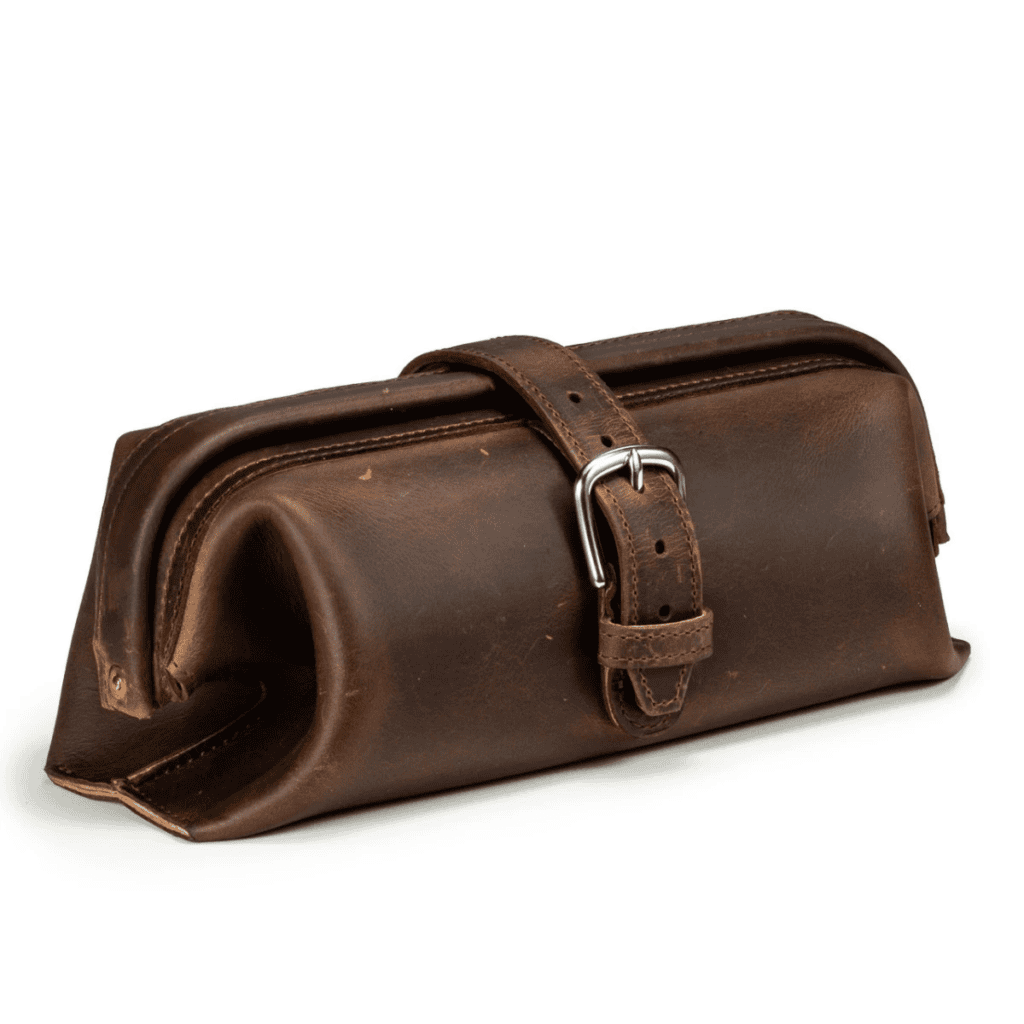
The Saddleback Leather Little Toiletry Bag is a two-pound slab of full-grain leather built to last a hundred years—literally, that’s the warranty. It’s the opposite of the ultralight philosophy that dominates most outdoor gear, and reviewing it means being honest about where that makes sense and where it absolutely doesn’t.
So let’s get the disqualifier out of the way first, then talk about where this thing genuinely shines.
Let’s Be Clear: This Is Not a Backpacking Bag
If you count grams, stop reading. This is not your dopp kit for a lite camping trip.
At roughly 10.5 x 4 x 3.5 inches and a full two pounds empty, the Little Toiletry Bag is bulky and heavy by any backcountry standard. Two pounds is a chunk of your pack weight budget spent before you’ve added a single item—and it’s leather, so it doesn’t compress, roll, or squish into a gap the way a nylon pouch does. For anyone hiking in, bikepacking, or watching ounces, this is simply the wrong tool. A $15 silnylon ditty bag will beat it every time on the metric that matters out there.
That’s not a knock on the bag. It’s just not what it’s for.
Where It Belongs: The Glamping Vibe
Now picture a different kind of trip. You’re car camping or setting up at a well-appointed site. There’s a canvas tent, maybe a cot, a proper camp kitchen, and you’re staying more than one night. Weight is irrelevant because nothing’s going on your back.
That’s where the Little Toiletry Bag earns its keep. When you’re not carrying it up a mountain, everything that made it a liability becomes a feature. The full-grain leather looks and feels like a piece of heirloom kit, not disposable gear. It sits open on a camp table and stays put. It shrugs off the rough handling of being tossed in and out of a truck bed. And the water-resistant grain leather takes dew, spills, and the occasional rain splatter in stride.
It’s the difference between surviving a trip and enjoying one. For the glamping and basecamp crowd, this is a bag that makes the whole setup feel intentional.
Where It Truly Shines: Travel Abroad
Here’s the use case that justifies the whole thing. For international travel, the Little Toiletry Bag is close to perfect.
The reason is exactly the durability that sinks it for backpacking. When you’re packing for a trip abroad, your toiletry kit gets jammed into a carry-on, wedged into an overhead bin, and crushed under whatever the person three rows back decided to bring. A soft pouch surrenders; your shampoo ends up flattened and your bag comes out misshapen. This thing doesn’t care. The rigid full-grain leather construction holds its shape and protects what’s inside—it won’t get crushed in an overhead bin, and it won’t split a seam when a gate agent forces the bin shut.
The build backs that up at every point:
One solid piece of leather, minimal seams: fewer seams means fewer failure points. It’s built to not break.
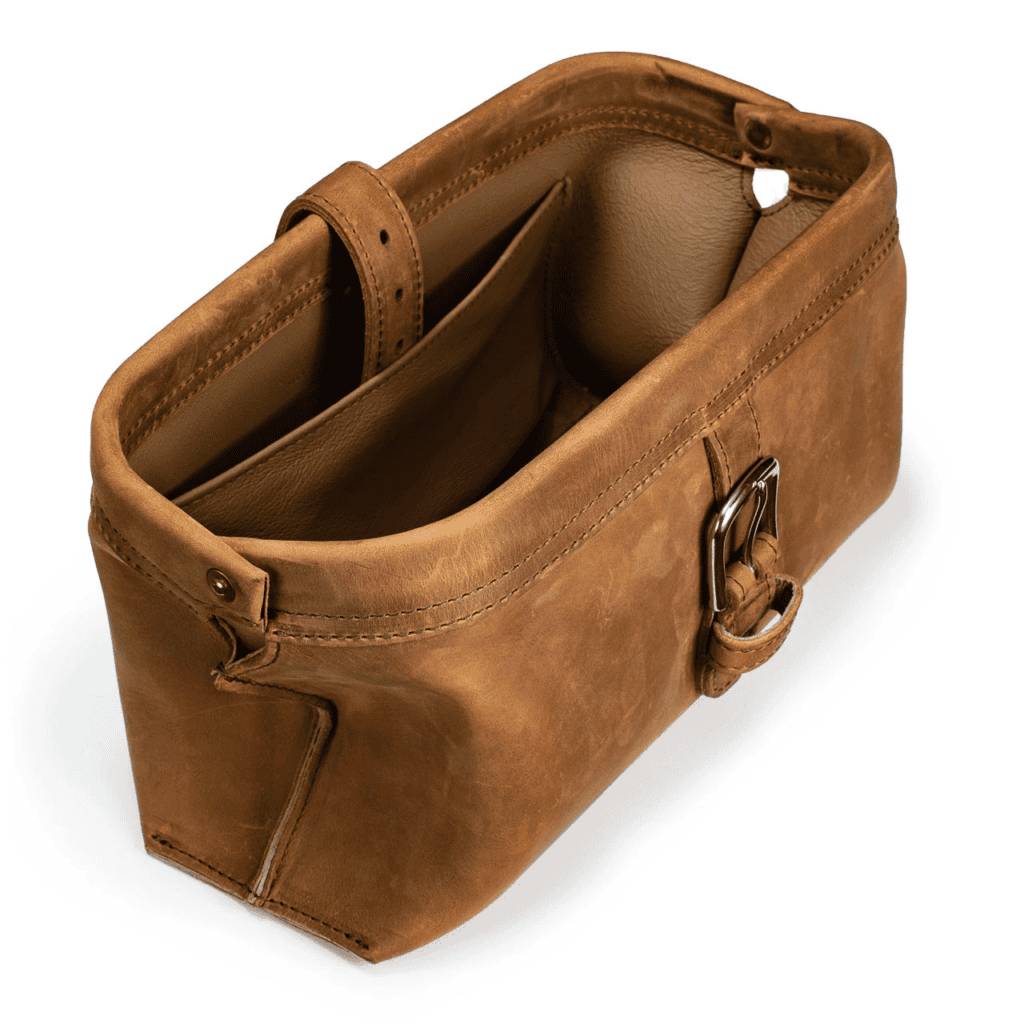
Pigskin lining: tougher than cowhide lining, so the inside survives the leaks and spills that eventually ruin fabric kits.
316 stainless steel hardware: marine-grade, corrosion-resistant metal on the closure—the kind of spec that matters when it’s the only moving part.
Buckle closure, no zipper: there’s no zipper to blow out at the worst possible moment. A simple strap-and-buckle Gladstone closure means nothing to jam, snag, or fail. It’s a deliberate “no breakable parts” design.
For a bag you check, carry on, and drag through six airports, “no breakable parts” isn’t marketing—it’s the whole point.
Living With It
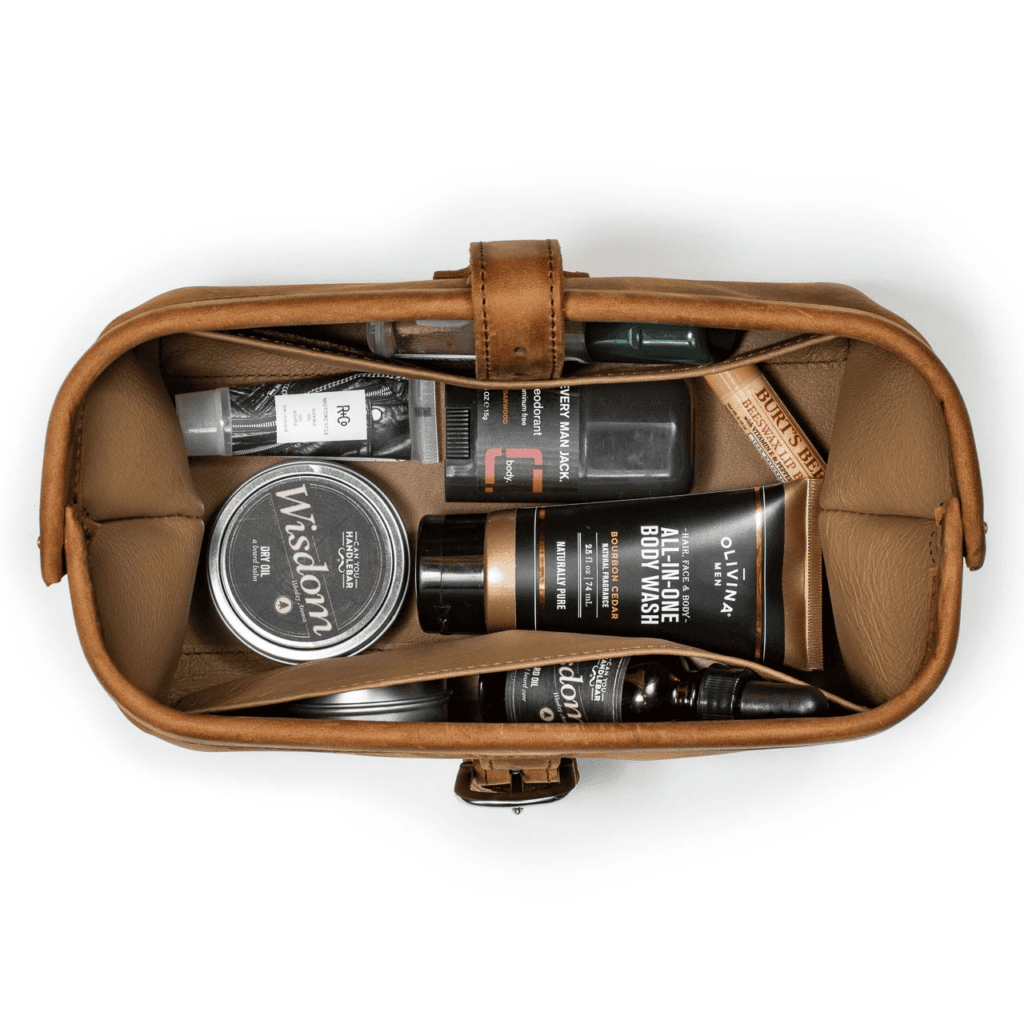
Two interior pockets keep the small stuff sorted, and the wide mouth opens up for easy access to everything inside—no fishing blind through a narrow zipper gap. It holds a genuinely full kit: the essentials plus the extras you actually bring on a longer trip.
A word on the leather itself. Full-grain isn’t finished to hide wear; it develops a patina, picking up character with every trip. Some people will love that a scuff from a cobblestone street in Lisbon becomes part of the bag’s story. If you want something that looks factory-fresh forever, this isn’t it—and that’s rather the point.
The 100-year warranty deserves a mention too. It’s not a gimmick so much as a statement of intent: Saddleback builds this to be handed down, not replaced. Amortized over decades, $169 stops looking like a splurge on a toiletry bag and starts looking like the last one you’ll buy.
For lightweight or backcountry camping, skip it without hesitation. Two pounds of non-compressible leather has no business in a pack you carry on your back. But for glamping, car camping, and basecamp trips where weight doesn’t matter, it turns a toiletry kit into a piece of gear you’re glad to own. And for travel abroad, it’s genuinely excellent—crush-proof, weather-resistant, and built with no parts that can fail when you’re a long way from home.
Match it to the right trip and it’s one of the best pieces of kit you’ll pack. Bring it on the wrong one and you’ll feel every ounce. Just know which trip you’re taking.
Technical Specs at a Glance
Saddleback Leather Little Toiletry Bag
Dimensions: 10.5″ W x 4″ H x 3.5″ D
Weight: 2 lbs (empty)
Exterior: Full-grain leather (water-resistant grain), ages to a patina
Lining: Pigskin (tougher than cowhide)
Hardware: 316 marine-grade stainless steel; strap-and-buckle Gladstone closure (no zipper)
Construction: One solid piece of leather, minimal seams, marine-grade polyester thread
Interior: Two pockets, wide-mouth opening
Colors: Black, dark brown, tan/English tan, reddish-brown
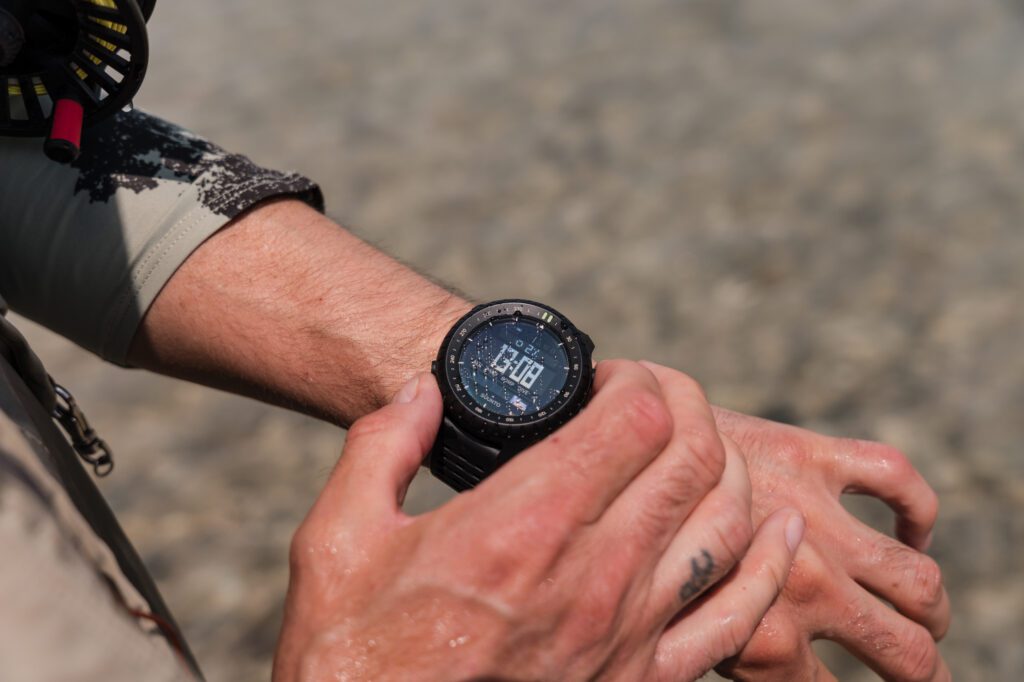
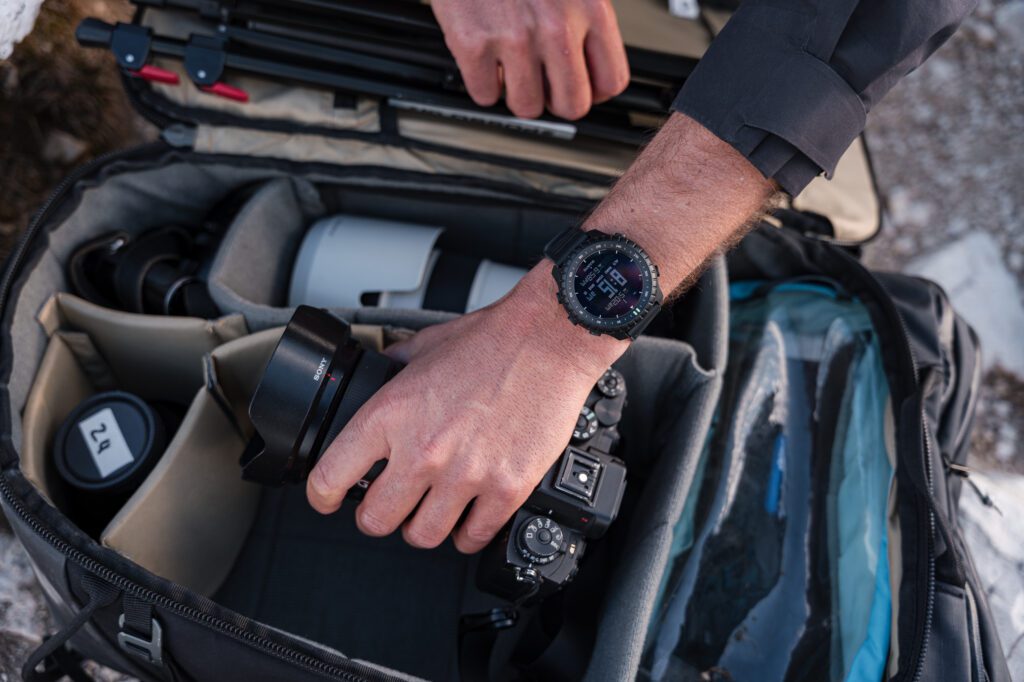
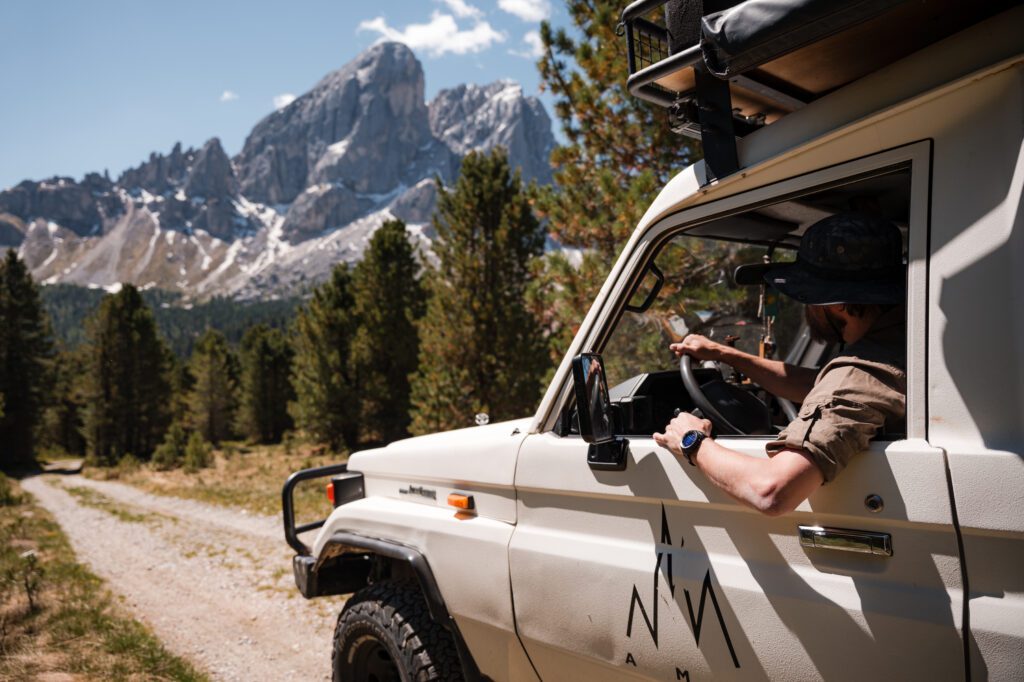
The first thing I noticed about the Suunto Core 2 wasn’t a feature. It was the silence.
For two weeks in Colorado’s high country, the watch sat on my wrist through long climbs, cold mornings, thunderstorms, camp chores, creek crossings, and those slow, tired miles back to the trailhead when the only thing you want is a burger, dry socks, and a little less elevation loss in your knees. It never buzzed at me. Never asked to be charged. Never tried to turn a hike into a wellness report.
Just a watch. Quietly useful.
That may not sound revolutionary, but in today’s outdoor watch market, it kind of is. Somewhere along the way, adventure watches became tiny smartphones. They track sleep, score recovery, monitor stress, measure heart rate variability, and deliver enough data to make a casual weekend outside feel like a lab study. Some of that is valuable. Some of it is noise. And when you’re standing above treeline watching clouds gather over the next ridge, noise is exactly what you do not need.
The Suunto Core 2 takes a different path.
At its heart, this is still an ABC tool watch: altimeter, barometer, compass. The essentials. The things that help you understand terrain, weather, direction, and timing when you’re beyond reliable service and your phone has become more camera than lifeline. Suunto has modernized the Core platform with a brighter display, tougher materials, improved water resistance, Bluetooth time sync, step tracking, moon phase, sunrise and sunset data, and a long-life replaceable battery, but it has not turned the watch into something it was never meant to be.
That’s the win.
This is not a GPS training watch. It is not a smartwatch. It is not trying to be your coach, your therapist, your phone, or your social feed. It is a wrist-mounted outdoor instrument for people who spend real time outside and want useful information without babysitting another device.
After two weeks of testing it in the Colorado high country, hiking and camping with it day after day, I came away with a pretty clear impression: the Core 2 is for people who value simplicity, durability, and environmental awareness more than digital excess.
Testing Grounds: Colorado High Country
Colorado is a good place to test outdoor gear because the mountains don’t care what the spec sheet says.
A jacket that looks good in town can fail fast in wind. A pack that feels fine in the garage can punish you after six miles of climbing. A watch that seems capable on paper has to prove itself when the trail turns steep, the sun gets harsh, and the afternoon forecast starts changing in real time.
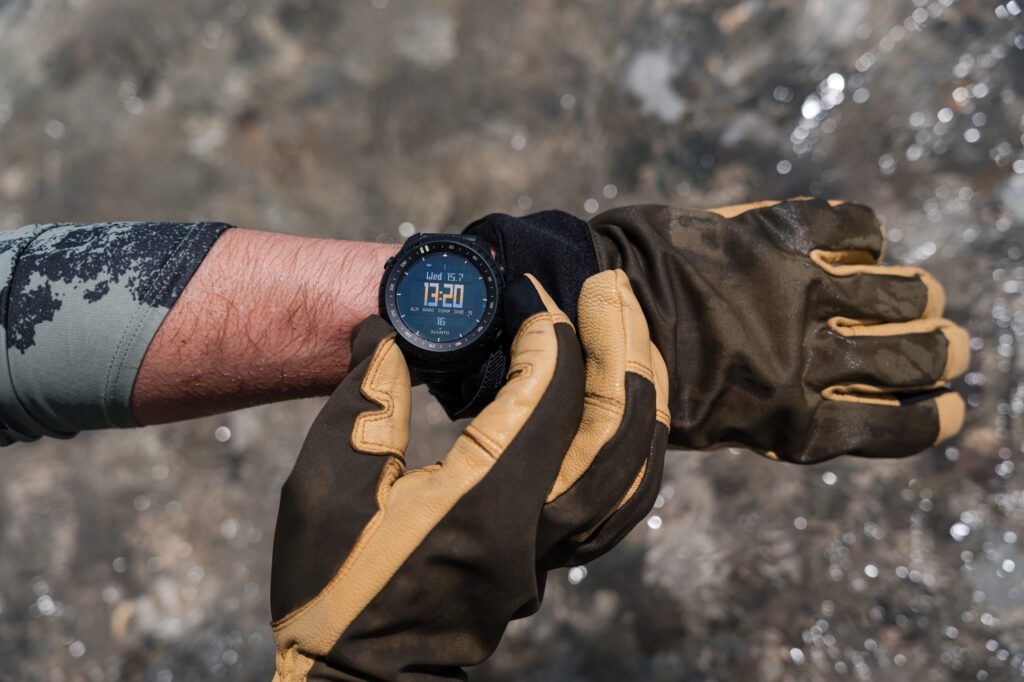
I wore the Core 2 across a mix of high-country conditions: exposed trails, forested approaches, rocky overlooks, wet campsites, and long days where the weather shifted from calm and bright to unsettled and cold in a matter of hours. There were bluebird mornings that turned into storm-watch afternoons. There were chilly starts where gloves made the larger buttons easier to appreciate. There were times when the altimeter gave me a better sense of progress than the trail itself.
High country has a way of stripping gear down to the truth. Either it helps, or it gets in the way.
The Core 2 helped.
Built Like a Watch You Can Forget About
The Core 2 feels rugged without trying too hard to look rugged. That matters more than it sounds. Some outdoor watches lean so far into the tactical aesthetic that they feel like costume pieces. Others look clean but fragile, like one good scrape against granite might ruin the whole mood. The Core 2 lands somewhere more useful: durable, understated, and plainly built for repeated outdoor use.
The watch uses a Corning Gorilla Glass screen, an aluminum bezel, a reinforced composite case, and a 22mm silicone strap. The case measures 49mm by 14.8mm and weighs 56.5 grams, light enough that I stopped noticing it during long hikes but substantial enough that it never felt cheap or delicate. That balance is not easy. Too light and a watch feels disposable. Too heavy and it becomes wrist furniture.
This one wears right.
Over two weeks, I knocked it against rock, scraped it while moving around camp, wore it under jacket cuffs, rinsed it after dusty hikes, and forgot about it during a few moments when I probably should have been more careful. It came through looking and functioning like a tool should. The silicone strap was comfortable in heat and cold, easy to clean, and secure enough that I never had to fiddle with it mid-hike.
That became a theme with the Core 2. Less fiddling. More moving.
The Display: Better Where It Matters
A brighter display is not the kind of feature that makes people lose their minds in a product launch. It should, though, because outdoor readability is one of those things that either works or quietly irritates you all day.
The Core 2 has a 1.3-inch LED display with Corning Gorilla Glass and a claimed 40% improvement in brightness and visibility over the original Core. In Colorado sunlight, especially above treeline, that matters. Harsh sun can turn plenty of watch faces into mirrors. The Core 2 stayed readable in exposed conditions, whether I was checking elevation on a rocky overlook or glancing at the time while crossing an open meadow with the sun high overhead.
No squinting contest. No wrist gymnastics.
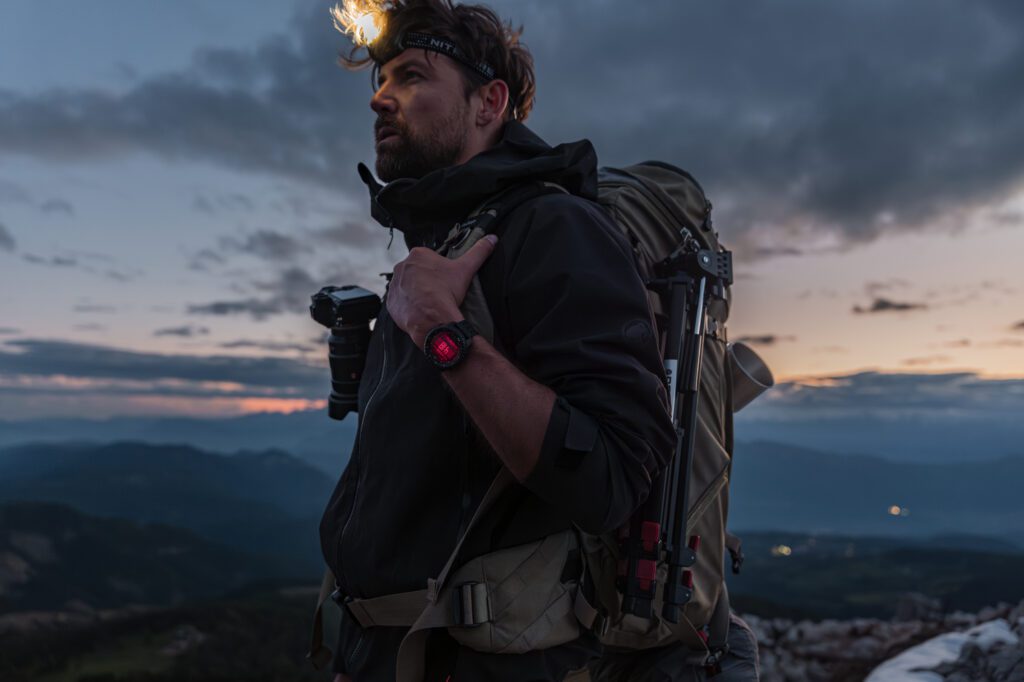
The backlight is also more thoughtful than expected. The Core 2 includes switchable red and green backlight options with raise-to-wake functionality. Around camp, that small feature became genuinely useful. A bright white backlight can feel obnoxious when you’re trying to preserve night vision, find something in your tent, or check the time without lighting up the whole campsite. Red and green give you options. They feel intentional, especially for hunters, anglers, guides, night hikers, and anyone who spends time outside after dark.
It’s a small thing until you use it. Then it stops feeling small.
Altimeter: Elevation as Context
In Colorado, elevation is not just a number. It is the shape of the day.
The Core 2’s altimeter tracks real-time altitude, ascent, and descent, and I found myself checking it more often than I expected. Not obsessively. Just enough to add context to the effort. When a climb felt harder than it should, the watch often explained why. When the trail flattened after a sustained push, the ascent data gave a satisfying little confirmation that the work had been real.
On hikes where the route moved through rolling terrain, the altimeter helped me understand where I was in the bigger picture. It is one thing to look at a map before heading out. It is another to feel the climb in your legs and see your elevation changing on your wrist. For hikers, backpackers, hunters, and anglers moving through uneven country, that kind of information can be surprisingly grounding.
The updated sensor processing seemed stable throughout my testing. Like any barometric altimeter, it is not magic. Weather changes can influence readings, and serious users should calibrate as needed, especially before big days. But for general backcountry awareness, the Core 2 gave me what I wanted: a clear sense of elevation, progress, and vertical movement without forcing me into a GPS-based ecosystem.
Again, that is the point. It gives you environmental information without turning the day into a digital workout file.
Barometer and Storm Alarm: Paying Attention to the Sky
This is where the Core 2 started to feel less like a watch and more like an outdoor companion.
Colorado weather can be gorgeous, dramatic, and deeply inconvenient, sometimes within the same hour. Anyone who hikes here long enough learns to watch the sky, the wind, the temperature, and the behavior of clouds around high ridges. The Core 2 adds another layer to that awareness by tracking barometric pressure trends and alerting you when pressure drops quickly.
During testing, I had one afternoon where the storm alarm became more than a feature on a spec sheet. The morning had been warm and clear, one of those deceptive high-country days where you start believing the weather might give you a pass. By early afternoon, the light changed. Clouds began stacking in the distance, but nothing looked urgent yet. The watch registered the pressure shift before the weather fully announced itself.
That got my attention.
Did the Core 2 make the decision for me? No. It should not. A watch does not replace judgment, forecasts, local knowledge, or the old mountain rule of getting below treeline before things get spicy. But it gave me one more signal, and in the mountains, one more signal can matter.
Storm alarm. Real value.
For Huck Adventures readers, I think this is one of the strongest selling points. Not because it is flashy, but because it aligns with how outdoor people actually make decisions. You gather information. You watch conditions. You adjust. The Core 2 gives you a simple, wrist-based way to monitor pressure trends without pulling out a phone or hoping you have service.
Compass: Offline Still Matters
It is easy to underestimate the value of an offline magnetic compass until your phone loses service, your GPS app gets fussy, or you simply want a quick bearing without waking up another device.
The Core 2 includes an offline magnetic compass with bearing lock, and while I would still carry a traditional compass and map in serious backcountry terrain, having a dependable compass on my wrist was useful more often than I expected. It helped with quick orientation at trail junctions, checking general direction while moving through open terrain, and confirming what I was seeing on the map.
This is not about replacing core navigation skills. It is about convenience and redundancy.
Those are different things.
Outdoor gear works best when it supports good habits rather than encouraging lazy ones. The Core 2 fits that role well. It gives you direction quickly, without requiring signal, charging, or app management. For hikers, hunters, overlanders, anglers, and backpackers, that has obvious value.
Battery Life: The Freedom of Not Caring
The battery may be my favorite thing about this watch, which sounds deeply boring until you consider how much modern outdoor gear now depends on charging.
Phones. Headlamps. Satellite messengers. Cameras. GPS watches. Battery banks. Rechargeable lanterns. Wireless earbuds. The modern campsite is starting to look like a mobile electronics lab.
The Core 2 wants no part of that.
It uses a replaceable CR3032 button cell battery, with Suunto listing battery life up to 15 months in the product information. Some launch messaging suggests typical use may stretch even longer, but even at 15 months, the practical benefit is enormous. You do not charge it before a trip. You do not pack a cable. You do not ration battery percentage on day three. You just wear it.
That changes your relationship with the watch. It becomes more like a compass, headlamp, or knife: a piece of kit you trust to be there when needed.
For multi-day campers, backpackers, hunters, anglers, and guides, this matters. Battery life is not just convenience. It is reliability. And while plenty of smartwatches have impressive battery modes, they still require management. The Core 2’s approach is different. It removes battery management from the equation almost entirely.
That feels refreshing.
Water Resistance: Ready for Weather, Crossings, and Camp Life
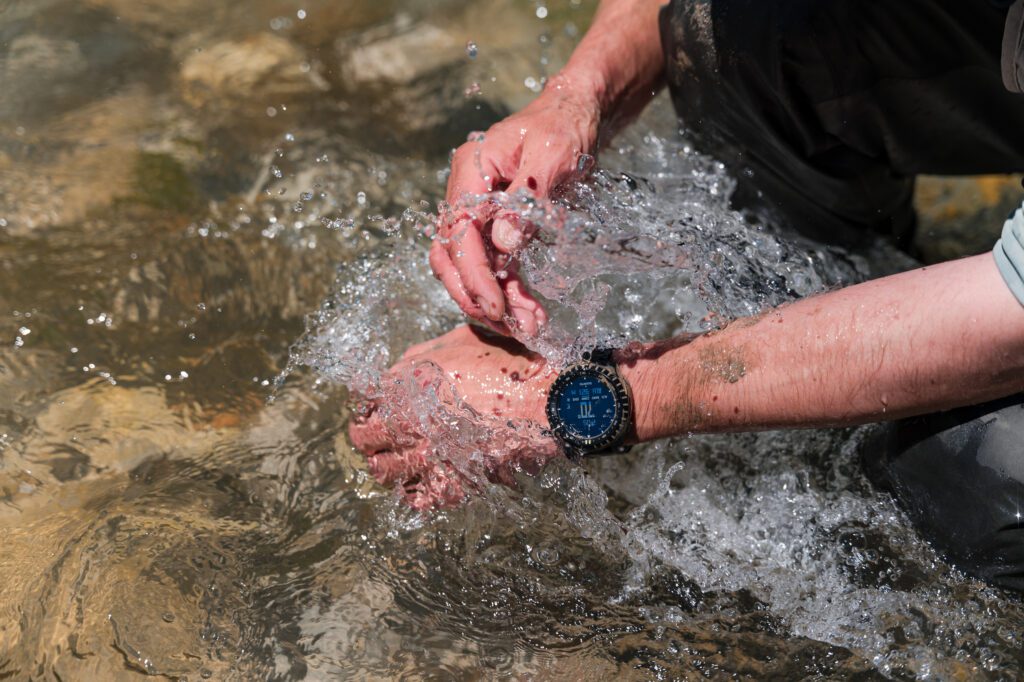
The Core 2 improves water resistance to 10 ATM, a major upgrade over the original Core’s 3 ATM rating. In practical terms, that means I did not think twice about rain, splashes, creek crossings, wet gear, or washing dust off the watch after long hikes.
That is how it should be.
Outdoor watches should not feel precious around water. If you are camping in the Rockies, fishing alpine lakes, hiking through afternoon rain, paddleboarding, rafting, or just getting caught in bad weather, water resistance needs to be a baseline expectation, not a fragile promise. The Core 2 feels much better suited to that reality.
It also includes improved water activity and dive-related functionality, giving users clearer monitoring of depth and time in underwater conditions. That may not matter to every hiker, but it broadens the watch’s use case for paddlers, swimmers, anglers, and travelers who want one durable everyday outdoor watch rather than separate tools for every activity.
Camp Features: More Useful Than They Look
Some of the Core 2’s smaller features felt secondary at first, then slowly earned their place.
Sunrise and sunset data is a perfect example. When you are camping, daylight becomes a planning tool. How long do I have before setting up the tent becomes annoying? Can I squeeze in one more short hike before dinner? How much time do I have to fish before I’m hiking back by headlamp? These are ordinary decisions, but they shape the rhythm of a trip.
Having sunrise and sunset on the wrist keeps that information close.
Moon phase was another feature I initially treated as nice-but-not-essential. Then I used it while thinking through nighttime visibility around camp, planning an early start, and considering whether a short night walk would be pleasant or awkwardly dark. Hunters, anglers, photographers, and night hikers will likely find even more use for it.
The Core 2 also includes dual time, countdown, stopwatch, alarm, and step tracking with app upload. None of these features define the watch, but they round it out. They make it more livable day to day without overwhelming its identity as a tool watch.
That restraint is important. The Core 2 adds enough modern convenience to feel current, but not so much that it becomes needy.
Bluetooth and OTA Updates: Modern, But Not Distracting
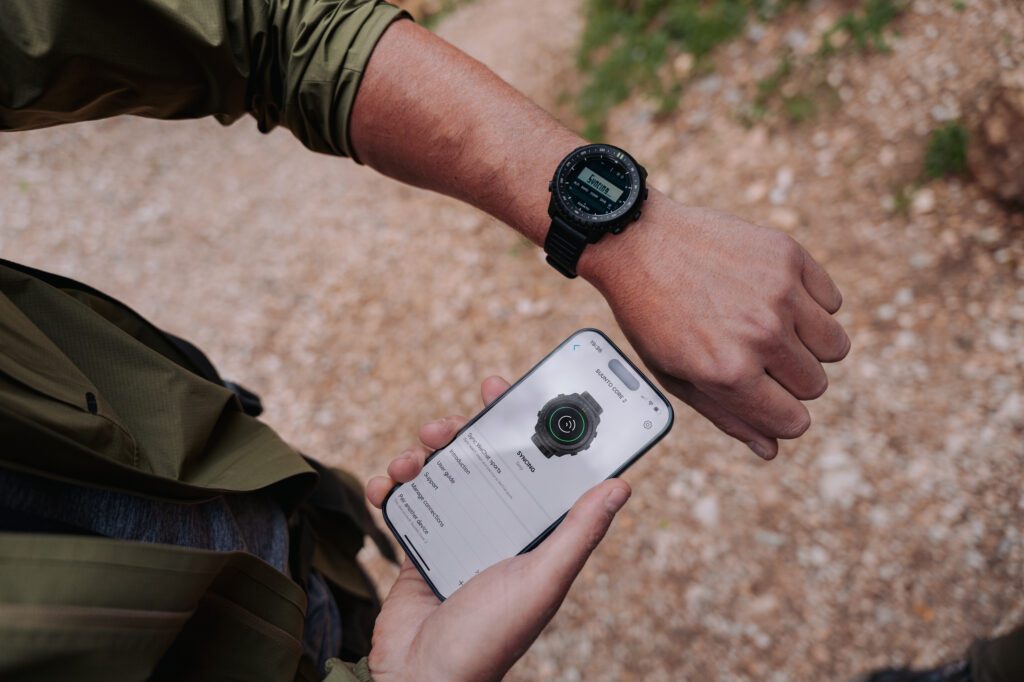
Bluetooth connectivity on the Core 2 exists for practical reasons: time sync and over-the-air updates through the Suunto app. That is the right level of connectedness for this kind of watch.
It is modern without becoming noisy.
I appreciated that the watch could sync time and receive updates without becoming another notification machine. There is a big difference between useful connectivity and constant connectivity. The Core 2 seems to understand that difference.
For the target user, that matters. The person buying this watch probably does not want another wrist-based inbox. They want a durable outdoor tool that benefits from modern software support while staying focused on the essentials.
Fit and Everyday Wear
A good outdoor watch still has to work when the hike is over.
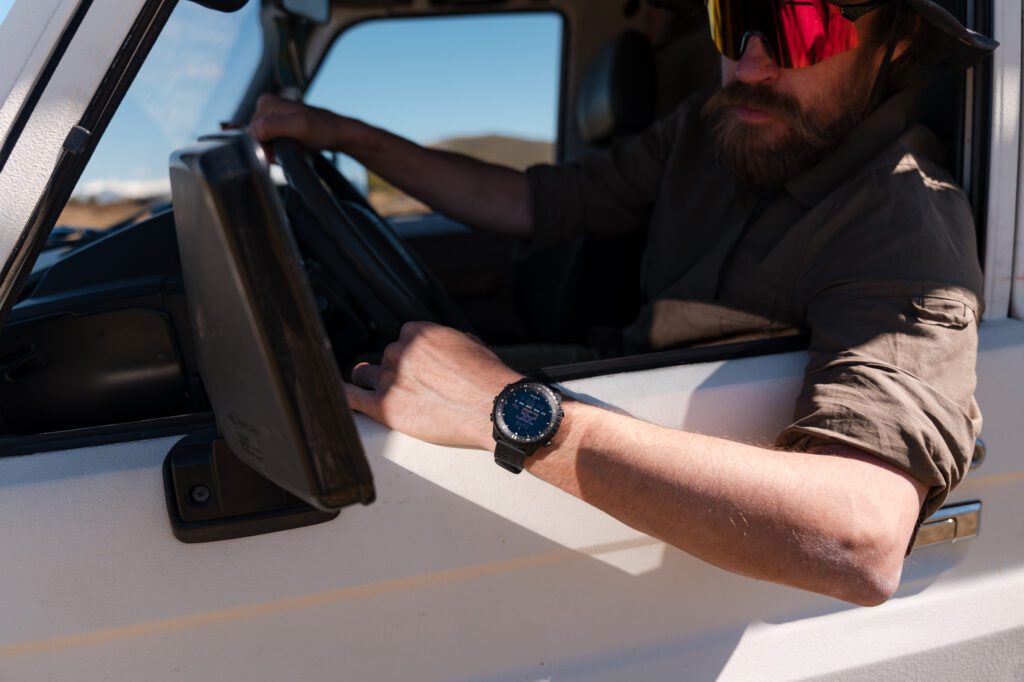
The Core 2 wears well as an everyday piece. The 49mm case is not tiny, but it suits the tool-watch aesthetic and did not feel cumbersome on my wrist. The silicone strap was comfortable during active use and casual wear, and the overall design feels clean enough for everyday use without pretending to be dressy.
This is one of the reasons I think the Core 2 will appeal to the EDC crowd. It has that dependable-object quality. Like a well-made pocketknife or a favorite field jacket, it feels useful even when you are not actively using every feature.
That may sound intangible, but gear people understand it.
Some products invite trust. The Core 2 does.
Who This Watch Is Really For
The Core 2 is not for everyone, which is exactly why it works.
It is for hikers who want elevation and weather information without wearing a full training watch. It is for backpackers who value long battery life and simple tools. It is for campers who want sunrise, sunset, moon phase, alarms, and weather awareness in one durable package. It is for hunters and anglers who care about pressure trends, low-light readability, and long days in rough conditions. It is for overlanders and outdoor professionals who appreciate gear that works without constant charging.
It is also for people who are tired of every device trying to become every other device.
This is the audience I would aim at most directly: outdoor traditionalists with modern expectations. They do not reject technology. They simply want technology to behave like gear, not like entertainment.
For that person, the Core 2 makes a lot of sense.
Who Should Skip It
If you want GPS route tracking, onboard maps, wrist-based heart rate, music, structured workouts, recovery metrics, or detailed training analytics, this is not your watch.
That’s not a flaw. That’s clarity.
Trail runners, triathletes, marathoners, and data-driven endurance athletes will likely be better served by a GPS sports watch. Suunto makes those too. So do Garmin, Coros, Polar, and Apple.
The Core 2 belongs in a different category. It is a tool watch, not a performance computer.
Once you stop expecting it to be something else, it becomes much easier to appreciate what it is.
The Price Point
At $199 MSRP, the Core 2 occupies a compelling space. It costs far less than premium GPS adventure watches, yet it offers a durable build, essential outdoor sensors, strong water resistance, improved readability, and battery life measured in months rather than days.
That makes it appealing not just as a primary outdoor watch, but also as a backup or alternate watch for people who already own something more advanced. I can imagine plenty of users keeping their GPS watch for training and races, then reaching for the Core 2 on camping trips, scouting days, fishing weekends, travel, or times when simplicity feels better than metrics.
That may be one of the smartest ways to think about it.
Not less capable. Less distracting.
Final Verdict
After two weeks in the Colorado high country, the Suunto Core 2 left me with a clear impression: this is a watch for people who actually go outside and want their gear to act like gear.
It is not trying to impress you with endless features. It is trying to earn trust through usefulness. The altimeter gives context to the climb. The barometer and storm alarm help you pay attention to changing weather. The compass provides direction without signal. The display stays readable in harsh sun. The battery life removes one more thing from your mental checklist. The construction feels ready for years of trail dust, rain, rock, and camp life.
The Core 2 succeeds because it has restraint.
That is rare now.
In a market crowded with watches that want to track everything, analyze everything, and interrupt everything, Suunto built something quieter. A modern update to a classic outdoor tool. A watch that understands the difference between information and distraction.
For hikers, campers, hunters, anglers, backpackers, guides, and anyone who spends enough time outside to value simplicity, the Core 2 is easy to recommend.
Not because it does everything.
Because it does the right things.
Technical Specs at a Glance
Display: 1.3-inch LED with improved brightness and readability
Quick verdict: The PAKA Original Crew ($149) is the sweater I pull on the second the temperature drops — the cool bite of a summer morning at camp, the chill that rolls in after the sun goes down, and, before long, every crisp fall day I can get. Built from a 65% Royal Alpaca blend, it’s softer than cashmere, absurdly light (under a pound), naturally odor-resistant, and thermoregulating across a wide temperature swing. It’s not cheap, but this is a buy-it-for-a-decade piece. It’s already my favorite layer, and I haven’t even gotten it to aspen season yet.
There’s a particular kind of cold that summer camping sneaks in on you. It’s not the deep cold of winter — it’s the 5 a.m. chill when you unzip the tent, or the drop that comes the moment the sun dips behind the ridge and the fire hasn’t caught yet. It’s the reason I always throw one sweater in the bag no matter how warm the forecast. For a while that was whatever old fleece was closest. Now it’s the PAKA Original Crew, and it’s not close.
What is the PAKA Original Crew?
This is the sweater PAKA was founded on — the piece the whole company grew out of, first knit in Cusco, Peru. It’s their best-seller and their flagship, and unlike a lot of “alpaca-blend” apparel, it’s alpaca-forward. The essentials:
Spec
Detail
Price
$149
Material
65% Royal Alpaca fiber / 35% recycled nylon
Weight
0.89 lb / 14.24 oz
Fit
Unisex, relaxed
Comfort range
Thermoregulating across a 50°F+ range
Construction
Stretch side-panels, raglan sleeves for range of motion
Softness
Royal Alpaca at 18–19 microns — softer than cashmere
Sourcing
Hand-knit and hand-signed by women artisans in Peru; OEKO-TEX certified dyes
Care
Hand wash cold (or machine delicate/cold); lay flat to dry
That 65% Royal Alpaca content is worth pausing on. The PAKA pieces I’ve reviewed before — the Sol Hoodie, the Essential boxer brief — use alpaca as a performance accent in a larger blend. This flips that: alpaca is the main event here, which is why it feels and performs the way it does. At 18–19 microns, the fiber is fine enough to wear with nothing underneath.
Why alpaca makes this the perfect camp layer
I’ve gone deep on alpaca fiber in my other PAKA reviews, so I’ll keep this focused on what matters for a camp sweater specifically.
Thermoregulation across a huge range — this is the headline. Alpaca evolved in the Andes, where a single day swings from below freezing to warm sun, and the fiber adapted to handle both. PAKA pegs the Original Crew’s comfort range at over 50°F. In plain terms: it keeps you warm in the pre-dawn chill and doesn’t cook you when you’re moving around camp or the afternoon warms up. That range is exactly the summer-camping problem — cold mornings, warm middays, cold evenings — solved by one layer you never take off.
It’s shockingly light and packable. At 0.89 lb, it weighs less than your coffee mug. It’s the definition of a no-brainer throw-in-the-bag layer, because it costs you almost nothing in pack weight or space and pays off every single time the temperature dips.
Naturally odor-resistant. Alpaca resists odor-causing bacteria, so this handles the reality of camp life — worn around the fire, slept in, worn again the next morning — and stays fresh far longer than fleece or synthetics between washes. On a multi-day trip that’s not a luxury, it’s the difference between one sweater working for the whole trip and needing a backup.
Softer than cashmere, and no itch. Royal Alpaca is lanolin-free, so there’s none of the scratch people brace for with wool. This is genuinely luxurious against the skin — soft enough that “I’ll wear it to bed in the tent and then to dinner in town” is a real sentence.
On cool camp mornings and evenings
This is where it’s earned its place in my kit this summer.
The morning routine at camp is the best argument for it. Crawl out of the tent into the cold, pull the Crew on over a tee, and stand there with a coffee while the valley warms up — comfortable the entire time, from the shivery first minute to the point where the sun finally clears the ridge. I don’t have to shed it as things warm because the thermoregulation handles the transition. Same story in reverse at night: as the fire dies down and the cold settles in, it’s the layer that keeps the evening going a little longer instead of driving me into the tent.
The relaxed fit, stretch side-panels, and raglan sleeves mean it moves — reaching for firewood, hauling the cooler, scrambling around camp — without binding or riding up. It’s a sweater that works, not just one that looks the part.
The part I’m actually looking forward to: fall
Here’s my honest confession. As good as this has been for summer camping, I bought it with September and October in mind, and I can’t wait.
There’s a specific window in the Colorado high country when the aspens turn — whole hillsides going gold, the air gone crisp, the light turning that low amber color that only happens in fall. It’s my favorite few weeks of the year, and it’s exactly the weather this sweater is built for: cool, dry days where you want one perfect layer from the morning hike through the afternoon leaf-peeping to the cold walk back to the car. I already know the Original Crew is going to live on my back for that entire stretch — trailheads, overlooks, a thermos of something warm, gold leaves overhead. If it’s this good in the margins of summer, fall is going to be its whole season.
Honest notes
The price. $149 is a real number for a sweater. What you’re paying for is 65% Royal Alpaca (not a token blend), genuine hand-knit construction by Peruvian artisans, and the kind of durability that makes this a ten-year piece rather than a two-season one. Cost-per-wear is where it wins — but the upfront sticker is the sticker.
It needs gentle care. Hand wash cold is best; if you machine wash, keep it on delicate and cold, and always lay flat to dry. This is the trade for a natural, fine-micron fiber — it’s not the toss-it-in-on-hot piece a synthetic hoodie is. Treat it right and it lasts; treat it like gym gear and you won’t be happy.
Relaxed, unisex fit. The cut is intentionally relaxed. I love it, but if you want a trim, athletic silhouette, size down or know that’s not this sweater’s personality.
Who it’s for
Buy it if: you want one do-everything layer for cool mornings and evenings, you camp or travel in variable temps, you value natural fiber and ethical sourcing, and you’ll keep a quality piece for years.
Skip it if: you want a low-maintenance machine-wash-and-forget layer, or you’re not looking to spend at this tier.
PAKA Original Crew: the verdict
The best layer is the one that quietly solves a problem you’d stopped expecting to solve — in this case, the constant on-and-off of dressing for temperatures that won’t hold still. The PAKA Original Crew handles the whole swing of a camp day in one impossibly soft, sub-one-pound package, and it does it while looking good enough to wear straight into town.
It’s already my most-reached-for layer of the summer, and I have a feeling that once the aspens turn, it’s barely coming off. At $149 it’s an investment, but it’s the kind you feel good about every cold morning you pull it on. That’s the highest compliment I give a piece of gear.
FAQ
Is the PAKA Original Crew good for camping? Yes. Its alpaca fiber thermoregulates across a 50°F+ range, so it keeps you warm on cold camp mornings and evenings without overheating midday. At under a pound it packs easily, and its natural odor resistance means one sweater handles a multi-day trip.
What is the PAKA Original Crew made of? 65% Royal Alpaca fiber and 35% recycled nylon. The Royal Alpaca is 18–19 microns, making it softer than cashmere and itch-free.
How warm is it? PAKA rates its comfort range at more than 50°F thanks to alpaca’s natural thermoregulation — warm when it’s cold, breathable when you’re active. It’s a versatile three-season layer rather than a heavy winter-only sweater.
How much does it weigh? 0.89 lb (14.24 oz) — lighter than a full coffee mug, which makes it an easy layer to pack.
Is alpaca itchy? No. Alpaca is lanolin-free, the compound most people react to in sheep’s wool, so it feels smooth and soft against the skin — you can wear this crew without an undershirt.
How do you wash it? Hand wash on cold for best results, or machine wash on delicate and cold. Always lay flat to dry; do not iron.
How much does it cost? $149, with free shipping on PAKA orders over $150.
Is it good for fall? Ideal. Cool, crisp fall days are squarely in its comfort range, making it a perfect single layer for hikes, leaf-peeping, and everything from morning to evening.
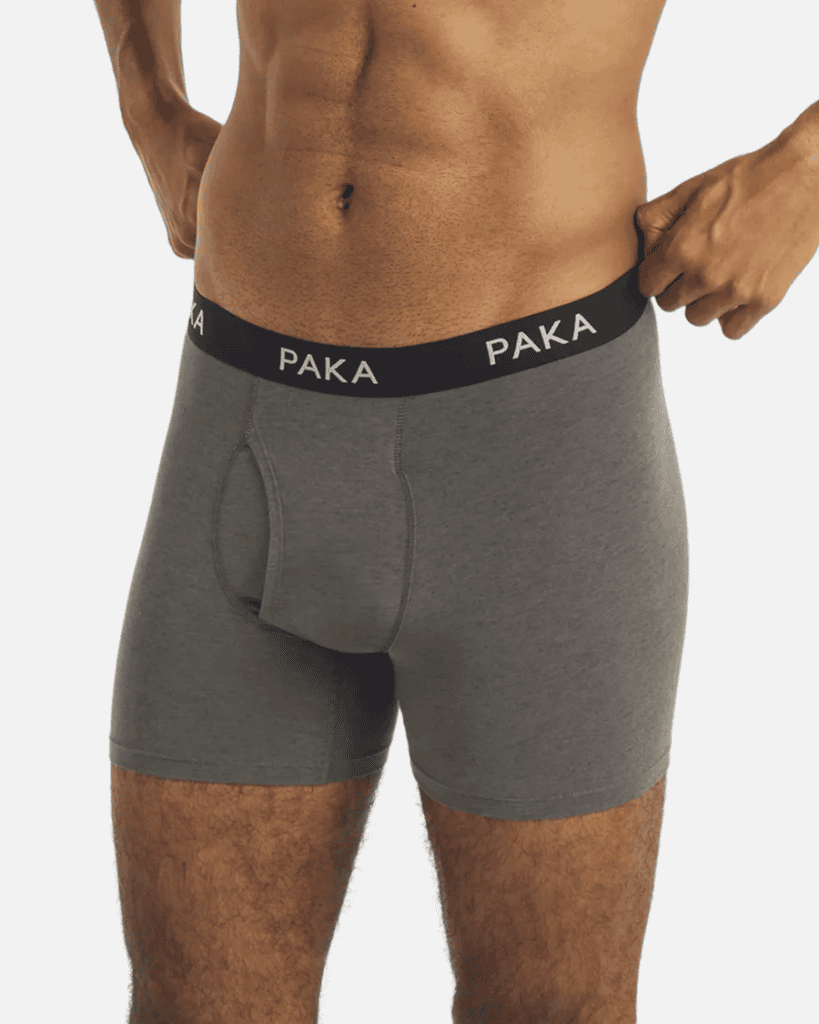
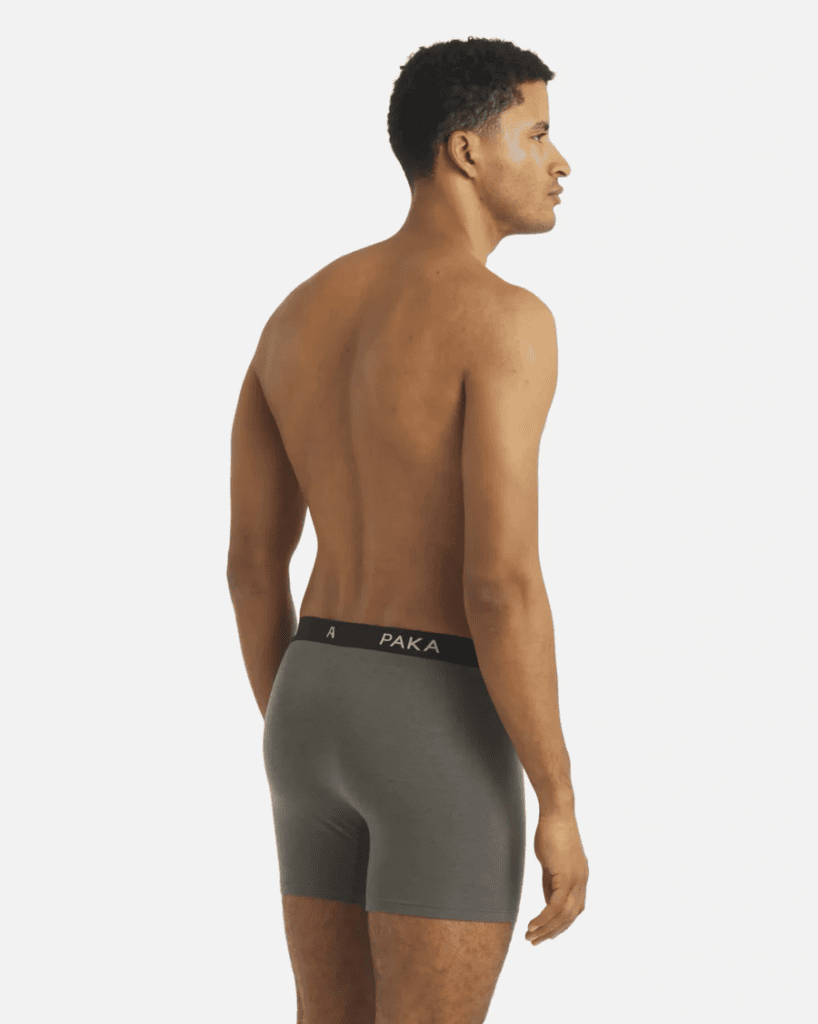
Quick verdict: The PAKA Men’s Essential Boxer Brief ($39) is the best trail underwear I’ve tested, full stop. Built on a Royal Alpaca, TENCEL, and organic Pima cotton blend, it does the two things that actually matter on an extended trip: it resists odor well enough to wear for multiple days between washes, and it wicks and moves well enough that I’ve done big mileage with zero chafing. It’s not cheap for a single pair, but for camping, thru-hiking, and travel, it’s worth every dollar. This is the “forget you’re wearing it” underwear the marketing promises, and for once the marketing is right.
Let’s just get the awkward part out of the way, because there’s no polite way to review trail underwear.
On an extended camping trip, you are not doing laundry. You are wearing the same base layers for days, and the single garment that determines whether that’s tolerable or miserable is your underwear. I know how it sounds. But the honest test of a piece of trail underwear is exactly this: can you wear it for multiple days, put real miles on it, and not end up chafed, swampy, or unbearable to be around? The PAKA passes that test better than anything else I’ve worn, and it comes down to the fiber.
What is the PAKA Essential Boxer Brief?
It’s PAKA’s everyday boxer brief, built from the same alpaca-fiber philosophy the brand is known for, blended specifically for all-day, stay-put comfort. The details:
Traceable Alpaca™; supports 300+ women artisans in Peru
Sustainability
Natural fibers, BPA-free spandex, no forever-chemicals against skin
The blend is the key. Royal Alpaca brings the performance, TENCEL (derived from eucalyptus) adds a cooling, moisture-moving layer, organic Pima cotton keeps it soft and familiar next to skin, and a touch of spandex gives it stretch that snaps back to shape instead of bagging out.
Why alpaca fiber is the secret
If you read my PAKA Sol Hoodie review, you know I went deep on why alpaca outperforms. The same fiber science is doing the heavy lifting here, and in underwear the benefits are even more noticeable because of where and how you’re wearing it.
It’s naturally odor-proof and antimicrobial — this is the whole ballgame. Alpaca fiber naturally resists the bacteria that cause odor. That’s not a coating that washes out; it’s structural to the fiber. In practice, it’s what lets you wear these for multiple days on the trail without them turning into a biohazard. Synthetic underwear holds onto stink after a single sweaty day — the bacteria live in the fabric. Alpaca simply doesn’t give them the same home. It’s the single most important property in a piece of multi-day trail underwear, and it’s the reason these have earned a permanent spot in my pack.
It’s hollow-core, so it thermoregulates and wicks. Alpaca fibers have microscopic air pockets that move moisture and air, pulling sweat away from your skin and letting it evaporate. Paired with the fast-drying TENCEL, that keeps you dry down there — and dry is the entire foundation of a no-chafe day (more on that below).
It’s lanolin-free, so there’s zero itch. The classic knock on wool underwear is that the idea makes you wince. Alpaca has no lanolin, the compound most people actually react to, so it lands closer to cashmere than to scratchy sheep’s wool. Against sensitive skin, all day, that matters a lot.
It covers you in natural fiber, not forever-chemicals. Most performance underwear is pure synthetic, sometimes treated with antimicrobial chemistry that sits against your most absorbent skin. PAKA’s approach is natural fibers doing the work instead, with BPA-free spandex and Traceable Alpaca sourcing. If you’re trying to get petrochemicals off your body, this is a legitimately better option.
Multi-day wear: the honest report
Here’s the part that sounds gross and is actually the point.
On a recent multi-night trip I wore a single pair for the duration — hiking during the day, sleeping in them, back on the trail the next morning. Normally that’s a recipe for regret. With these, it genuinely wasn’t. The odor resistance is real: they stayed wearable and fresh-enough across multiple days in a way synthetics simply don’t. Air them out overnight and they reset noticeably by morning. I’m not going to tell you they’re magic and never need washing — they’re underwear, not sorcery — but the number of days you can comfortably and considerately go between washes is dramatically higher than anything synthetic or plain cotton.
For an extended camping trip where every ounce and every wash counts, that changes your packing math. Two pairs covers a trip that used to need four or five. Less weight, less laundry, more trail.
Thru-hiking and the no-chafe test
The bigger claim, and the one I was most skeptical of: real mileage with no chafing.
Chafing is a moisture-plus-friction problem. It happens when wet fabric drags against skin, mile after mile. Beat the moisture and the smoothness of the fit, and you beat the chafe. These win on both:
Moisture management. The alpaca-and-TENCEL blend wicks sweat and dries fast, so the fabric against your skin stays dry instead of turning into a wet, abrasive layer. This is the root fix.
Shape retention. The spandex means they stretch with every stride and then return to shape — they don’t sag, bunch, or ride up, which is where a lot of chafe actually starts. No creeping seams, no wedgie readjustments every half mile.
Flat, smooth knit. The jersey construction sits smooth against the skin with no bulky seams grinding at the inner thigh.
I put multiple-mile days in these on rolling terrain and finished with no hot spots, no raw patches, nothing. For anyone who’s ended a long hike walking like a cowboy because their underwear betrayed them, that alone is worth the price of entry.
Honest notes
The price. At $39 a pair, this is premium underwear, and buying a few pairs adds up fast. The value math works if you weight it against what you’re actually getting — fewer pairs needed per trip, years of durability, and comfort that genuinely changes your trail experience. But there’s no getting around the sticker on a single pair.
It’s a blend, not pure alpaca. Royal Alpaca is 14% of the fabric, with TENCEL and Pima cotton making up the bulk. That’s by design — the blend is what makes it soft, stretchy, and wearable — but if you came expecting a majority-alpaca garment, set expectations accordingly. The performance is real; the alpaca is the active ingredient, not the whole recipe.
Cotton content means slower dry than pure synthetic. The Pima cotton adds softness but the blend won’t flash-dry quite like a 100% synthetic technical brief if you fully soak it. In practice it dried fast enough for me, but it’s the honest trade for the natural-fiber comfort.
Who they’re for
Buy them if: you take extended trips, thru-hike or do big-mileage days, want to pack fewer pairs, care about odor control and no chafing, or want natural fiber against your skin instead of synthetics.
Skip them if: you want the cheapest option, or you specifically need the fastest-drying synthetic brief for high-sweat, wet-climate efforts.
PAKA Alpaca Underwear: the verdict
The best gear disappears, and trail underwear disappearing is the highest form of that compliment — because you only notice underwear when something’s gone wrong. Across multi-day camping and real thru-hiking miles, the PAKA Essential Boxer Brief never once made itself known. No stink, no chafe, no readjusting, no regret. The alpaca fiber does exactly what PAKA says it does, and after living in these on the trail, I’m not going back to synthetics.
At $39 a pair it’s an investment, but it’s the rare piece of gear where the upgrade is something you feel every single mile. Buy two pairs, take them on your next long trip, and you’ll understand.
FAQ
Can you really wear PAKA alpaca underwear for multiple days? Yes. Alpaca fiber is naturally antimicrobial and odor-resistant, so these stay fresh far longer between washes than synthetic or plain cotton underwear. Airing them out overnight resets them noticeably, which makes them ideal for extended camping and thru-hiking where laundry isn’t an option.
Do they prevent chafing on long hikes? In my testing, yes. Chafing is caused by moisture plus friction; the alpaca-and-TENCEL blend wicks sweat and dries quickly to keep skin dry, while the shape-retaining stretch and flat jersey knit prevent the bunching and riding-up that start chafe. I logged multi-mile days with no hot spots.
What are PAKA boxer briefs made of? 48% TENCEL (from eucalyptus), 33% organic Pima cotton, 14% Royal Alpaca, and 5% BPA-free spandex.
Is alpaca underwear itchy? No. Alpaca is lanolin-free — lanolin is what most people react to in sheep’s wool — so it feels soft and smooth against the skin, closer to cashmere than traditional wool.
How much do they cost? $39 for a single pair.
Are they good for travel? Excellent. The odor resistance and quick-drying blend mean you can pack fewer pairs, wear them longer between washes, and even rinse and hang-dry them overnight on a trip.
Is alpaca better than merino for underwear? Alpaca offers similar natural odor resistance and thermoregulation with a hollow-core fiber that’s exceptionally breathable and lanolin-free (so non-itchy). Merino typically dries a bit faster, but alpaca’s softness and antimicrobial performance make it excellent for next-to-skin wear.
Quick verdict: The Peak Design Outdoor Backpack 45L ($329.95) hits the exact sweet spot for multi-night camping — big enough to swallow a full weekend of gear, structured enough to carry it comfortably, and weatherproof enough that you stop worrying about the sky. Its 3-part spring-steel frame gives it real load support, the roll-top expands when you overpack (you will), and the modular interior means it moonlights as a camera bag without missing a beat. It isn’t an ultralight thru-hiking pack and it isn’t cheap, but for weekend trips where you’re hauling everything, the 45L is the size to get.
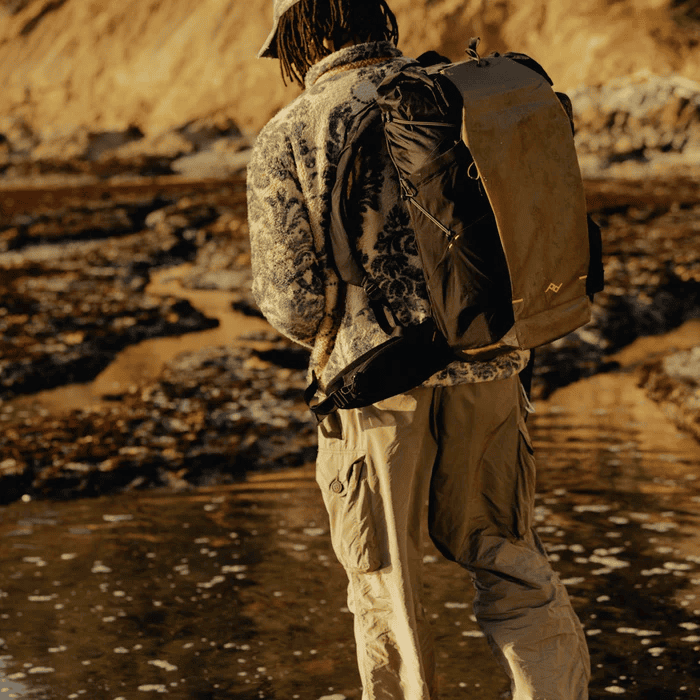
The hardest part of packing for a multi-night trip isn’t the gear. It’s the bag. Too small and you’re strapping things to the outside and playing Tetris at the trailhead. Too big and you overpack because you can, then carry the penalty on your back. The 45L Outdoor Backpack lands right in the middle, and after a season of weekend trips, it’s become my default.
What is the Peak Design Outdoor Backpack 45L?
Peak Design built its name on camera bags, then made a genuine outdoor pack — one designed to haul camping gear and camera kit with equal ease. The 45L is the largest of the line. The essentials:
Spec
Detail
Price
$329.95
Capacity
45L (expandable roll-top)
Frame
3-part spring-steel internal frame
Shell
Terra Shell 210D ripstop nylon — weatherproof, abrasion-resistant
Sustainability
100% recycled, bluesign-approved, PFAS-free
Closure
Expandable roll-top with Ultra Cinch
Hydration/laptop
Sleeve fits a 3L bladder (hose pass-through) or a 16″ laptop
Suspension
Vest-style load-lifter straps, hip belt, ventilated back panel
Weight
~1.55 kg claimed (real-world closer to 1.9 kg)
Sizes / colors
18L, 25L, 45L / Black, Eclipse, Cloud, Kelp
Warranty
Peak Design lifetime guarantee
The through-line is versatility: it’s a hiking pack that transitions to a travel bag that transitions to a camera hauler, and it’s built around Peak Design’s modular Camera Cubes and Packing Cubes if you want to organize the interior your way.
The 45L size is the whole point for camping
This is what you came to the review for, so let me be specific.
For a two-to-three-night trip, 45 liters is the number. It comfortably held my sleep system, a layered clothing kit, a food bag, cook setup, and the usual pile of small essentials, with room left rather than a fight to close it. That “room left” matters more than raw capacity — it’s the difference between packing thoughtfully and cramming.
And when you do overpack — everyone does on the first night out — the expandable roll-top is the release valve. Cinch it down over a light load for a compact, stable carry, or roll it up and over to reclaim real volume when you’re hauling extra food or a bulky layer. One bag flexes across a surprisingly wide range of trip lengths, which is exactly what you want if you’re not buying a different pack for every weekend.
The 3-part spring-steel frame is the unsung hero here. A lot of do-everything bags go frameless to save weight and turn into a sad sack the moment you load them. This one holds its shape and transfers weight to your hips through a proper hip belt, so a full multi-night load rides like it’s supposed to instead of dragging on your shoulders. On the trail that’s the whole game.
Hauling all the gear
A few features earn their keep once the pack is loaded:
Access. Multiple entry points mean you’re not excavating from the top every time you need something. The item you need at the bottom is reachable without unpacking the whole bag — a small thing that becomes a big thing at a windy trailhead.
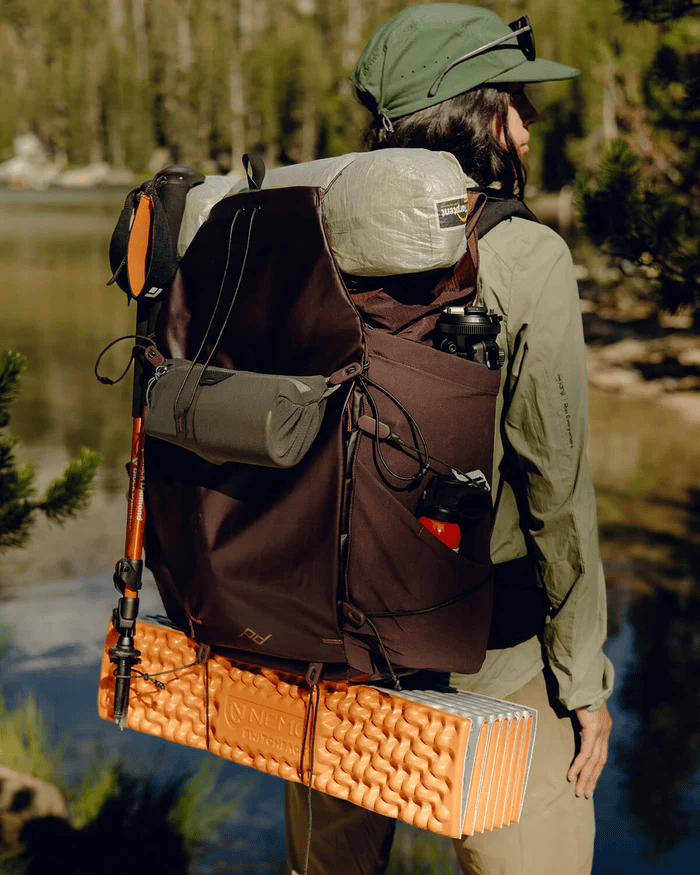
External storage. Vest-style load-lifter straps include quick-access pockets, and there’s a versatile external attachment system for the stuff that lives outside the bag — trekking poles, a wet layer, a tripod. Expandable exterior storage picks up the overflow.
Hydration. The dedicated sleeve takes a 3L bladder with a hose pass-through up top, so you can drink on the move without stopping. Off the trail, that same sleeve swallows a 16″ laptop — the trail-to-travel trick that makes this a one-bag option for a trip that starts at a desk and ends at a campsite.
Weatherproof, and it matters
The Terra Shell 210D ripstop nylon is weatherproof and abrasion-resistant, and on a trip where an afternoon storm rolls through — which, in the mountains, is most of them — that translates to not thinking about your gear. Rain shell on, keep walking. It’s also bluesign-approved, PFAS-free, and 100% recycled, which is the kind of materials story I like to see and increasingly expect at this price. Peak Design’s lifetime warranty backs the whole thing, which softens the sticker.
The camera-bag crossover
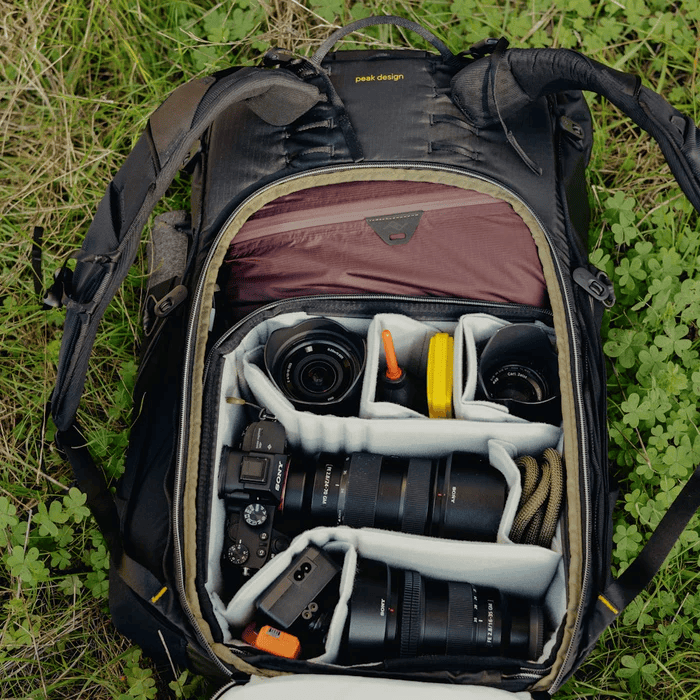
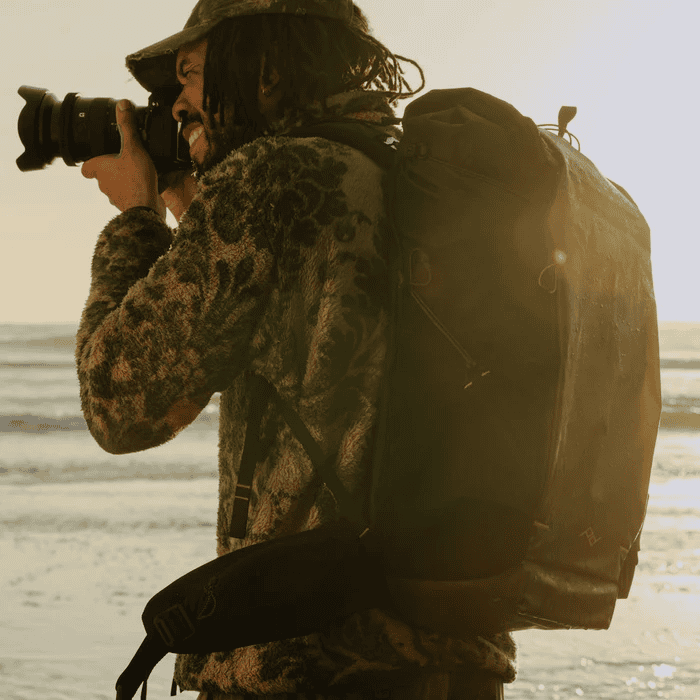
Worth a paragraph because it’s genuinely part of the value: this pack is built to accept Peak Design’s Camera Cubes, so if you shoot on your trips — I do — you can drop in a padded cube and turn the main compartment into protected camera storage, then pull it out and go back to a pure gear hauler. For anyone carrying a camera into the backcountry, that modularity is a real reason to choose this over a dedicated hiking pack that treats your camera as an afterthought.
Honest notes
It’s not an ultralight backpacking pack. At roughly 1.9 kg real-world, it’s light for what it is — a framed, weatherproof, do-everything bag — but a dedicated thru-hiking pack will weigh less. If you’re counting grams for long-distance trail miles, this isn’t that tool. For weekend and multi-night camping where durability and comfort matter more than shaving ounces, it’s dialed.
The roll-top has a learning curve. The Ultra Cinch and compression-cord system is clever but takes a few trips to get smooth. Early on it slows down access; once it’s muscle memory, it’s fine.
The price. $329.95 is premium. You’re paying for the frame, the materials, the modular ecosystem, and the lifetime warranty. If you’ll use the versatility — camp, travel, camera — it earns it. If you only ever need a simple weekend pack, there are cheaper ways to get 45 liters.
Who it’s for
Buy it if: you want one pack for multi-night camping that also handles travel and camera carry, you value load support and weatherproofing, and you’ll use the modular system.
Skip it if: you need the lightest possible pack for long-distance backpacking, or you want a budget option.
Peak Design Outdoor Backpack 45L: the verdict
The best pack is the one that makes packing a non-event and carrying a non-thought. For multi-night camping, the Outdoor Backpack 45L does both — the size is right, the frame carries a full load properly, the roll-top flexes when you overpack, and the weatherproof shell means you stop watching the sky. Add the camera-cube modularity and the lifetime warranty and the $329.95 starts to make sense as one bag doing the work of three.
It’s the pack I now grab for a weekend in the mountains without thinking about it. That’s the highest compliment I give a piece of gear.
FAQ
Is the Peak Design Outdoor Backpack 45L good for multi-night camping? Yes. 45 liters comfortably holds a sleep system, clothing, food, and cook kit for a two-to-three-night trip, and the expandable roll-top adds capacity when you overpack. The internal frame and hip belt make a full load carry comfortably.
How much does it weigh? Peak Design lists it around 1.55 kg; independent testing puts the real-world weight closer to 1.9 kg without accessories. It’s light for a framed, weatherproof pack but heavier than a dedicated ultralight backpacking bag.
Is it waterproof? It’s made from weatherproof, abrasion-resistant Terra Shell 210D ripstop nylon that protects your gear in wet conditions. It’s highly weather-resistant rather than fully submersible-waterproof.
Can it carry camera gear? Yes. It’s designed around Peak Design’s modular Camera Cubes, so you can convert the main compartment into padded, protected camera storage and remove it when you don’t need it.
Does it fit a hydration bladder? Yes — the dedicated sleeve holds up to a 3L bladder with a hose pass-through at the top, and the same sleeve fits a 16″ laptop for travel.
What size should I buy? For multi-night camping, the 45L is the pick. The 25L suits day hikes and overnights, and the 18L is a compact daypack. All come in Black, Eclipse, Cloud, and Kelp.
How much does it cost? $329.95, backed by Peak Design’s lifetime warranty.
Quick verdict:Dad Grass Leisure Drinks (from $44 a pack) are low-dose, hemp-derived THC beverages built for exactly one thing: a mellow, social buzz without the alcohol. Each can carries 3mg THC, 6mg CBD, and a co-active blend of Lion’s Mane and L-Theanine that keeps the vibe relaxed and clear-headed instead of couch-locked. The Jalapeño Lime (now sold as Margarita) is my favorite by a mile — genuinely delicious, and crucially, it doesn’t taste “hempy.” If you’ve aged out of getting actually high but still love winding down around a campfire without cracking a beer, this is the drink. Must be 21+.
Let me be honest about where I’m coming from. I’m too old to get high.
I don’t mean that as a rule, I mean it as a fact about my body. The version of me that wanted to be genuinely stoned is a couple decades in the rearview. These days what I actually want is to take the edge off, relax, and stay present enough to enjoy the fire and the conversation — and increasingly I want to do that without alcohol. That’s a surprisingly hard thing to buy. Most THC products are dosed for people trying to get lifted, and most non-alcoholic options are just fancy soda.
Dad Grass Leisure Drinks are the first thing I’ve found that’s dialed in for exactly this. Here’s the review.
What are Dad Grass Leisure Drinks?
They’re sparkling, hemp-derived THC beverages in a can — federally legal under the 2018 Farm Bill (under 0.3% THC), made in the USA, and dosed deliberately light. The specs are consistent across the lineup:
Spec
Detail
THC
3mg per can (hemp-derived Delta-9)
CBD
6mg per can
Co-actives
2200mg Lion’s Mane, L-Theanine, electrolytes
Onset
Fast-acting, 10–20 minutes
Price
From $44 per pack (buy-more-save-more)
Dietary
Vegan, non-GMO, gluten-free
Testing
Third-party lab COA via QR code on the can
Legal
Federally legal (<0.3% THC); must be 21+
The brand’s whole ethos is right there in the name. This is weed for the dad demographic — people who want a pleasant, controllable, sessionable lift that sits somewhere around a glass of wine in strength, minus the hangover. They call a single can roughly equivalent to one standard drink.
The active blend is the actual story
A lot of THC seltzers are just THC and bubbles. Dad Grass built theirs around a “feel-good formula” that matters more than the marketing suggests, and it’s the reason the experience feels different:
3mg THC does the light mood lift — enough to feel it, not enough to lose the afternoon.
6mg CBD takes the edge off and rounds out the THC so there’s no anxious jitter.
2200mg Lion’s Mane is the co-active that keeps your head clear rather than foggy.
L-Theanine — the same amino acid that makes green tea calm-but-alert — is the sleeper ingredient here. The combination of Lion’s Mane and L-Theanine is what gives these that specific mellow vibe: relaxed without being sleepy or dumb.
Electrolytes help you stay hydrated, which is the opposite of what alcohol does to you.
That THC + CBD + L-Theanine combination is doing real work. It’s the difference between “I feel nicely loose and chatty” and “I’m stoned and quiet in the corner.” For my purposes, it’s exactly right.
Fast-acting is underrated
One practical note that matters more than it sounds: these hit in 10–20 minutes, not the 1–2 hours an edible makes you wait. That fast onset is what makes them sessionable — you feel where you’re at before deciding whether to open a second, so it’s easy to pace and nearly impossible to accidentally overdo. Anyone who’s been ambushed by a slow-onset gummy an hour too late knows why this is a big deal.
The flavors, ranked
All three use real juices and natural extracts, and none of them taste like hemp — which, if you’ve tried other infused drinks, you know is the whole ballgame. Here’s my order.
1. Jalapeño Lime / Margarita — the winner. This is the one I reach for. It’s a bright, sparkling lime margarita with real lime juice and a subtle jalapeño kick that tingles without burning. “Delicious” is the word I keep using. It’s bold but balanced, and it’s the flavor that most makes you forget you’re drinking something functional rather than just a great sparkling beverage. (Heads up: Dad Grass now sells this as “Margarita,” but it’s the same Jalapeño Lime recipe.)
2. Yuzu Grapefruit Mint — the crisp one. Bright, lemony yuzu up front, a paloma-like grapefruit richness, and a cooling hint of mint to finish. It’s the most refreshing of the three and the crowd-pleaser — it’s also Dad Grass’s most-reviewed flavor by a wide margin, so plenty of people would rank it first. Excellent on a hot afternoon.
3. Mango Pineapple — the tropical one. Juicy mango and pineapple with a touch of tamarind for tang, so it’s lush without being syrupy or tiki-sweet. If you like fruit-forward drinks this might jump up your list; I just happen to lean citrus.
There’s no wrong answer here, and a sampler is the smart way in if you’re undecided.
Why these are perfect for camping
This is where Dad Grass earned a permanent spot in my cooler.
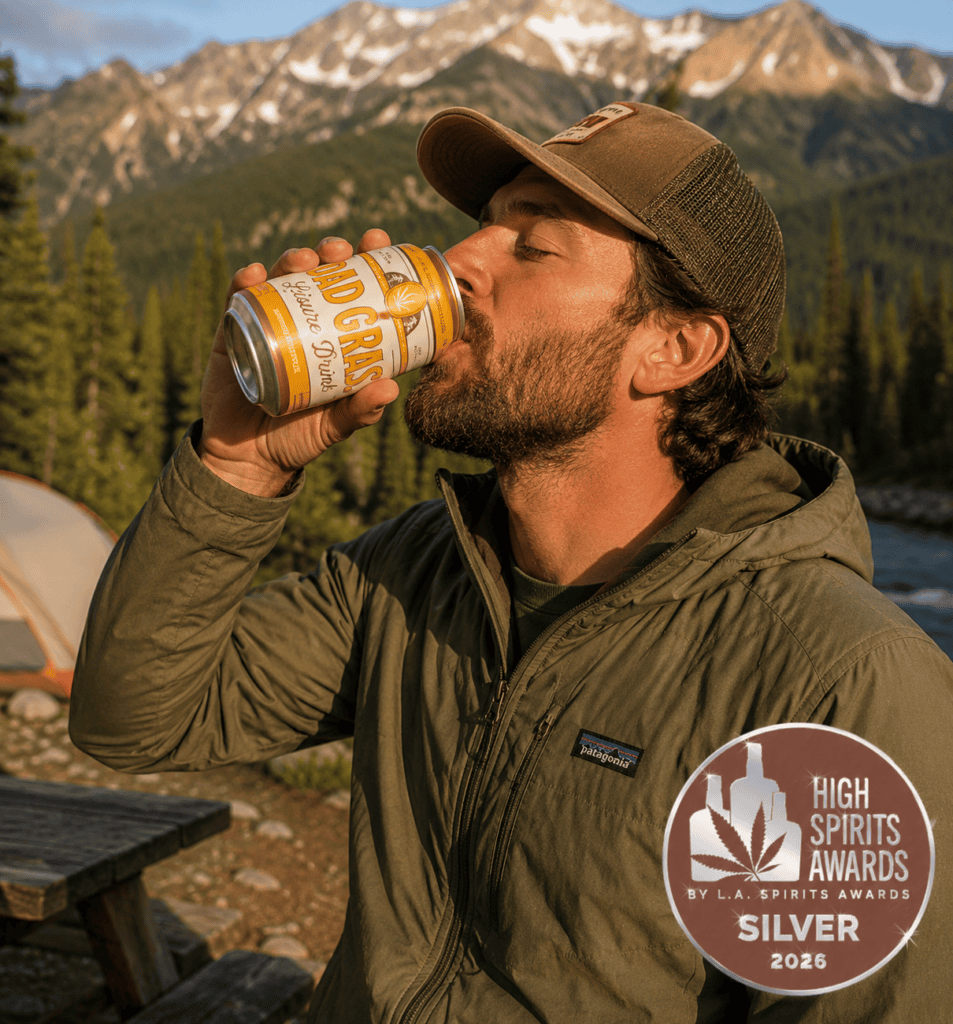
There’s a specific ritual to a beverage around the campfire — the crack of the can, something cold in your hand, the slow wind-down as the fire burns down. For years that meant beer. The problem with beer at camp, especially at altitude, is that it dehydrates you, wrecks your sleep in a tent, and leaves you foggy for the morning hike. Everything camping is supposed to sharpen, alcohol dulls.
A Dad Grass around the fire solves all of it. I get the same ritual and the same relaxed social buzz, but:
No hangover, so the dawn hike actually happens and it’s good.
Better tent sleep — no 3 a.m. alcohol-wakeup.
Electrolytes instead of dehydration, which matters more the higher you camp.
Clear-headed and present for the fire, the stars, and the conversation, which is the entire reason you came out.
Cans are cooler-friendly, they pack like any other drink, and the mild dose means you can nurse one or have a second over a long evening without tipping into “too much.” It’s become my default campfire beverage, full stop.
An honest note or two
Price. At $44+ a pack these cost more per can than beer or most grocery-store THC seltzers. What you’re paying for is the co-active blend, the real-juice flavor, and third-party lab testing (there’s a scannable COA on every can). For me it’s worth it; if you’re purely price-driven, it’s a real consideration.
Dose expectations. The name of the game is mild. If you’re a seasoned high-tolerance consumer looking to actually get baked, one 3mg can won’t do it — this is by design. Dad Grass makes a 10mg “PRO” version if you want more lift, but the 3mg is the sweet spot for the relaxing-not-wrecked use case these are built for.
Know the rules. These are 21+, hemp-derived, and federally legal under current law, but the hemp legal landscape is shifting — check your own state’s rules, and obviously don’t drive.
Who they’re for
Buy them if: you want a genuine alcohol alternative for social settings, you like a mellow buzz that keeps you clear-headed, you camp or spend evenings outdoors, or you’ve simply aged out of wanting to get properly high.
Skip them if: you want a strong high from a single can, or you need the cheapest option per serving.
Dad Grass THC Drinks: the verdict
I came to these looking for one specific thing — a way to relax and enjoy a campfire without alcohol and without getting actually high — and Dad Grass nailed it. The low, controllable dose, the clear-headed Lion’s Mane and L-Theanine blend, and flavors that genuinely taste great (that Jalapeño Lime especially) add up to the rare functional beverage I actually look forward to.
It’s the drink I now pack for camping by default, and the one I crack at the end of a long day instead of a beer. If “too old to get high but still want to chill” describes you, start with the Jalapeño Lime and thank me later.
Must be 21+. Hemp-derived, federally legal under current law; check your local regulations and never drive after consuming.
FAQ
How much THC is in a Dad Grass Leisure Drink? 3mg of hemp-derived Delta-9 THC per can, plus 6mg CBD. Dad Grass considers one can roughly equivalent to a single standard alcoholic drink. A 10mg “PRO” version is also available.
Will one can get me high? Not really — it’s designed for a mild, controllable buzz, not a strong high. Most people feel relaxed and a little lifted while staying clear-headed and functional.
How long does it take to kick in? About 10–20 minutes, much faster than a typical edible. That fast onset makes it easy to pace yourself.
What’s the best Dad Grass flavor? Subjective, but Jalapeño Lime (now sold as Margarita) is my favorite for its bright lime-and-jalapeño kick. Yuzu Grapefruit Mint is the most popular and most refreshing; Mango Pineapple is the fruit-forward tropical option.
Do Dad Grass drinks taste like hemp or weed? No. They’re made with real juices and natural extracts, and the flavor doesn’t have the “hempy” aftertaste common to many infused drinks.
Are Dad Grass drinks a good alcohol alternative? Yes — that’s the core use case. You get a relaxed, social buzz with no hangover, plus added electrolytes for hydration, which makes them especially good for camping and outdoor evenings.
Are they legal? They’re hemp-derived with under 0.3% THC, making them federally legal under the 2018 Farm Bill. You must be 21+ to purchase, and hemp laws vary and are evolving, so check your state.
What’s in them besides THC? 6mg CBD, 2200mg Lion’s Mane, L-Theanine, and electrolytes. They’re also vegan, non-GMO, and gluten-free, with third-party lab results accessible via a QR code on each can.
Quick verdict:The Rumpl Original Puffy Blanket in Crystal Worl’s Our Clan Opposites print ($129.95) is the rare piece of gear that pulls double duty as a legitimate camp layer and a genuinely beautiful object. It’s warm when the mountain air turns, packs down to the size of a water bottle, shrugs off dew and spilled beer, and carries real meaning in the print — a Tlingit formline design with a story behind every line. If you want one blanket that goes from the campsite to the fireworks blanket on the 4th of July, this is the one I keep reaching for.
There’s a specific moment on every summer camping trip in Colorado. The sun drops behind the ridge, the temperature falls about fifteen degrees in twenty minutes, and everyone who packed like it was going to stay 75 degrees starts eyeing the truck. I used to be one of those people. Now I just reach behind the seat for the Rumpl.
Here’s how it earned that spot.
What is the Rumpl Original Puffy Blanket?
The Original Puffy is the blanket that launched Rumpl — a packable, insulated outdoor blanket built like a puffy jacket you can wrap two people in. The version I’ve been living with is the Our Clan Opposites print from the Rumpl Artist Division’s collaboration with Tlingit artist Crystal Worl. Quick specs:
Every 1-Person blanket is made from about 60 recycled plastic bottles (100 for the 2-Person). It’s machine washable, backed by a 3-year warranty, and comes in a few sizes — Mini, Compact Throw, 1-Person, and 2-Person — which matters more than you’d think, and I’ll get to why.
The artist series: who is Crystal Worl?
This is the part that sets this blanket apart from every other camp blanket on the market, and it deserves more than a footnote.
Our Clan Opposites (HAA KÁANI) was designed by Crystal Worl, a Tlingit multidisciplinary artist based in Juneau, Alaska, for Rumpl’s Wooch Yáx̱ capsule. Wooch Yáx̱ is a Tlingit value centered on balance and harmony — not as a fixed state you arrive at, but as something you practice. The print itself renders that idea in bold formline geometry and contrasting amber and teal tones, depicting the balance and reciprocal responsibility between the Raven and Eagle moieties.
Worl describes formline not as a decorative style but as a language — one that holds stories, values, and relationships, where every shape and line has a purpose. Knowing that changes how it feels to use the thing. You’re not wrapping up in a random pattern; you’re using an object with intention woven into it. Rumpl’s whole framing for the collection is “designed to be used, not just seen,” and after a summer with it, that lands. (Worth noting: the Artist Division prints are limited-edition, so this exact colorway won’t be around forever.)
Camping: where it earns its keep
This is the blanket’s home turf. A few things stood out over a season of use:
The warmth-to-pack-size ratio is the whole pitch. It compresses into the included roll-top stuff sack down to about the size of a Nalgene, then unfurls into a genuinely warm layer. That RenewaLoft synthetic fill traps heat like a puffy jacket, so when the mountain air turns at dusk it’s the difference between staying out by the picnic table and retreating to the tent.
Set expectations on the warmth, though. Rumpl doesn’t temperature-rate these, and in my experience it’s comfortable right around 45°F and up. Think of it as added warmth when the cool comes in — a layer over a camp chair, an extra blanket in the bag, a wrap for the morning coffee — not a deep-winter sleeping bag. For summer in the mountains, that’s exactly the right tool.
The details are smart. The paracord corner loops let you stake it down as a ground blanket so it doesn’t chase the wind, and the PFAS-free DWR coating means morning dew beads off instead of soaking in. I’ve had it survive a spilled drink and a dusty tailgate with a shake and a wipe. When it finally got grimy, it went straight in the washing machine.
The Cape Clip® is the sleeper feature. The snaps let you wear it hands-free like a cape while you’re moving around camp — grabbing firewood, tending the stove, walking down to the water — which sounds gimmicky until the first cold morning you use it and never look back.
Wrapping up for the 4th of July fireworks
Here’s the use case that surprised me. On the 4th, we hauled it out to a field to watch the fireworks, and it went from camp gear to the best seat in the house. Warm enough to take the edge off a cool evening, big enough to share, and the print looks incredible in the low light.
One honest tip: if your plan involves wrapping up with someone, size up to the 2-Person (84 x 80 in). The 1-Person is perfect for solo use or a ground blanket, but the 2-Person is the one you want for sharing under fireworks with a partner or a kid tucked in beside you. Same print, same everything — just built to go around two.
The everyday summer companion
Past the marquee moments, this became my default grab-and-go. Beach mornings, backyard hangs, the trunk blanket that lives in the truck “just in case,” picnic in the park, sideline warmth at an evening game. It’s the piece of gear you stop thinking about because it’s simply always there — which is the highest bar any product can clear.
Care: keep it simple
All Rumpl Puffy blankets are machine washable. Rumpl recommends a front-loading machine on cold with a gentle, technical-gear detergent to preserve the DWR finish, then hang dry or tumble dry on low. One caveat worth stating plainly: it’s water-resistant, not waterproof. It’ll handle dew, light drizzle, and spills, but it’s not a rain tarp — don’t leave it out in a downpour and expect it to stay dry.
Who it’s for
Buy it if: you want one warm, packable blanket that crosses over from camping to fireworks to everyday use, you care about sustainable materials, and you appreciate design with a real story behind it.
Size up to 2-Person if: you plan to share it — fireworks, stargazing, kids.
Skip it if: you need cold-weather (sub-45°F) insulation as your primary goal, or you want something fully waterproof.
Rumpl Original Puffy Blanket: the verdict
The best summer gear disappears into your routine and shows up exactly when you need it. The Rumpl Original Puffy did that all season — warmth when the mountain air turned, a fireworks blanket on the 4th, a ground blanket at the beach, and the thing I grabbed for a hundred ordinary evenings in between. At $129.95 it isn’t the cheapest camp blanket out there, but between the build quality, the recycled materials, and a Crystal Worl print that carries genuine meaning, it’s the one I’d buy again without hesitating.
It lives in the truck now. That’s the highest compliment I give a piece of gear.
FAQ
Is the Rumpl Original Puffy Blanket good for camping? Yes. It packs down to roughly the size of a water bottle, weighs about 2.2 lbs (1-Person), and provides puffy-jacket-style warmth. Corner stake loops and a water-resistant DWR coating make it work as a ground blanket too. It’s ideal for summer and shoulder-season camping in about 45°F and above.
How warm is the Rumpl Original Puffy? Rumpl doesn’t assign a temperature rating, but it’s comfortable in roughly 45°F weather and above. For colder conditions, size up to the 2-Person or layer two blankets.
Who designed the Our Clan Opposites print? Tlingit artist Crystal Worl, based in Juneau, Alaska, designed it for Rumpl’s Wooch Yáx̱ Artist Division capsule. The HAA KÁANI print uses formline geometry to depict the balance between the Raven and Eagle clans.
Is the Rumpl blanket waterproof? No. It has a PFAS-free durable water repellent (DWR) finish that resists dew, spills, and stains, but it is not fully waterproof.
What size should I get for sharing? For sharing — fireworks, stargazing, cuddling up with a partner or child — go with the 2-Person (84 x 80 in). The 1-Person (52 x 75 in) is best for solo use or as a ground blanket.
Is it machine washable? Yes. Use a front-loading machine on cold with a gentle technical-gear detergent to preserve the DWR, then hang dry or tumble dry on low.
What is it made of? A 100% post-consumer recycled VersaWeave™ 30D ripstop polyester shell and liner, with 100% recycled RenewaLoft™ synthetic insulation. Each 1-Person blanket uses about 60 recycled plastic bottles.
Here’s the part of camping nobody puts on the highlight reel: the first night, I sleep like garbage.
Doesn’t matter how tired I am. New sounds. A pad that’s six inches thinner than my mattress at home. Thin mountain air at altitude. My brain treats the whole thing like a threat assessment until somewhere around 2 a.m. The second night isn’t much better. It usually takes me two rough nights before my body finally gives up the fight and gives me one genuinely good sleep.
By then it’s often time to pack up and drive home.
So when I think about camp gear, I don’t just think stoves and shelters. I think about the most underrated piece of kit there is: a wind-down ritual that actually works. That’s the lens I used to test the Dad Grass Deluxe Nighttime gummies—and they’ve quietly earned a spot in my camp bag.
First, Who Is Dad Grass?
If you haven’t run into the brand, Dad Grass is built on a refreshingly simple idea: low and slow. Their whole thing is mellow, dependable, dialed-in hemp products—not the white-knuckle, “did I take too much?” stuff. As they put it, you don’t have to be a dad or a dude to enjoy it. It’s nostalgic in the best way: the easygoing, hang-out version of cannabis rather than the couch-locked one.
That philosophy is exactly why it works for the outdoors. When I’m at camp, I want to relax and be present—watch the fire die down (responsibly, where allowed), listen to the creek, and actually settle. I don’t want to lose the evening or wake up foggy with a sunrise hike on the schedule. Dad Grass is engineered for that middle ground.
What’s Actually In Them
The Deluxe Nighttime gummies lean on three hemp-derived cannabinoids working together. Here’s the per-gummy breakdown:
18mg CBD – the calm anchor of the formula. CBD is the well-known, non-intoxicating cannabinoid people reach for to take the edge off and mellow out.
2mg CBN – the “nighttime” character. CBN is the cannabinoid most associated with that heavy-eyelids, ready-to-settle feeling.
2mg THC (Delta-9) – a genuinely mild dose. Just enough lift to quiet a busy mind without putting your head in the clouds.
The mix is full-spectrum, which means you also get the supporting cast of terpenes and minor cannabinoids—what’s commonly called the entourage effect. Each bag has 30 gummies in a Midnight Berry flavor that doesn’t taste like a vitamin.
A couple of practical notes that matter for the outdoors: they’re vegan, non-GMO, and gluten-free, and every batch is third-party lab tested with a Certificate of Analysis you can scan from the package. And thanks to the 2018 Farm Bill, hemp products under 0.3% THC are federally legal, so this isn’t dispensary-only gear—it ships to your door.
Why They Earn a Spot in the Camp Bag
This is where the testing got interesting.
My usual two-bad-nights pattern is really a relaxation problem. My body is tired; my nervous system just won’t stand down. The CBD-CBN-THC combo is built precisely for that handoff from on to off—and on the pad, that’s exactly what it felt like. About 30 minutes after a gummy, the background hum of “is that a bear or a branch?” turned down a few notches. I stopped fighting the pad and started melting into it.
The 2mg of THC is the key to keeping it functional. It’s mild enough that I wasn’t buzzed or weird around the fire—just relaxed. No racing thoughts, no clock-watching. I’d call it the difference between lying there trying to sleep and actually drifting off.
And the morning is the real test for any sleep aid in the backcountry. I came up clear, not groggy. No melatonin hangover, no fog dragging into the first miles of the day. For anyone who’s woken up feeling worse after a sleep gummy, that distinction is everything.
How to Use Them at Camp
A few field-tested pointers:
Timing: Take one gummy about 30 minutes before you actually want to be horizontal. Effects tend to start within half an hour and peak around 90 minutes, so don’t pop one and then go re-stake your tent in the dark.
Start low, go slow: One gummy is plenty for most people, especially if you’re new to THC. You can always go to two on a second night.
It’s still THC: Mild, but real. Don’t drive after taking one, and don’t take one until you’re done with camp chores for the night—no tending stoves, no driving to the trailhead.
Build the ritual: Pair it with the rest of your wind-down—headlamp off, layers on, hydration squared away. The gummy is the closer, not the whole routine.
The Verdict
We obsess over sleeping pads, quilts, and pillow systems, then ignore the one variable that wrecks most of my trips: a nervous system that won’t clock out. The Dad Grass Deluxe Nighttime gummies attack that variable directly. The CBD and CBN set a calm, sleepy baseline, and the small dose of THC quiets the mental chatter that keeps me staring at the tent ceiling—without stealing the morning.
They didn’t turn camping into my mattress at home. Nothing will. But they shrank that two-bad-nights tax down toward zero, and that alone makes them some of the most valuable real estate in my pack. If your first night out is always your worst, these are worth a spot in the kit.
This post reflects personal experience and is for general informational purposes only. These statements have not been evaluated by the Food and Drug Administration. These products are not intended to diagnose, treat, cure, or prevent any disease. Hemp-derived products containing THC may cause impairment; do not drive or operate equipment after use. Must be 21 or older. Check your local regulations before purchasing.
There is a point during every camping trip when modern life catches up with you.
Maybe it’s the phone battery dropping below 20% halfway through a three-day trip. Maybe it’s a GPS watch that suddenly needs a charge after tracking two long days of hiking. Maybe it’s a camera battery blinking red just as alpenglow starts painting the peaks above camp.
A decade ago, that was simply part of being outside.
Today, many of us carry enough technology into the backcountry that power has become part of trip planning.
After spending time with the Goal Zero Yeti 300 paired with the Nomad 50 Solar Panel, I came away thinking this is exactly the kind of setup most outdoor adventurers actually need. Not because it’s the biggest power station. Not because it powers an entire campsite. But because it hits a sweet spot that feels remarkably practical for hikers, campers, overlanders, photographers, and anyone setting up a comfortable basecamp in the mountains.
The Yeti 300 doesn’t try to do everything.
It simply does enough.
And for most Colorado adventures, that’s exactly right.
Understanding What the Yeti 300 Is
The first mistake people make when evaluating portable power stations is assuming bigger is always better.
It isn’t.
Especially when you’re loading gear into a truck for a weekend camping trip in Rocky Mountain National Park, heading into a dispersed campsite near Buena Vista, or setting up a photography camp somewhere deep in the San Juans.
The Yeti 300 is built around a 297Wh LiFePO4 battery and a compact design that prioritizes portability without sacrificing capability. Goal Zero designed it specifically for camping, outdoor recreation, emergency preparedness, and off-grid use. It features multiple charging options, weather-resistant construction, app connectivity, and compatibility with solar panels like the Nomad 50.
What immediately stands out is the size.
This isn’t a giant power station that requires two hands and a commitment. It feels more like a piece of camp gear than an appliance. Something you can toss in the truck next to your camp stove and cooler without reorganizing your entire loadout.
For weekend trips, that’s a huge advantage.
Life at Basecamp
The Yeti 300 isn’t something I’d carry while hiking.
Let’s get that out of the way.
At roughly 13 pounds, this is a basecamp tool, not a backpacking accessory. But once camp is established, it quickly becomes one of the most useful pieces of gear on site.
I kept imagining the kind of trips many Huck Adventures readers actually take.
You drive into the mountains on Friday afternoon. Set up camp. Spend Saturday hiking. Maybe fish an alpine lake. Maybe bring camera gear. Maybe work remotely for a few hours before heading out for sunset photography.
Throughout the weekend, devices quietly consume power.
Phones.
Headlamps.
GPS watches.
Action cameras.
Mirrorless cameras.
Satellite communicators.
Bluetooth speakers.
Tablet computers.
The Yeti 300 handles this ecosystem remarkably well.
With 297Wh of capacity and a variety of USB and AC outputs, it provides enough energy to keep essential gear running for several days without feeling oversized or excessive.
That’s really where this system shines.
Not powering your entire house.
Powering your adventure.
Why LiFePO4 Matters
Battery chemistry isn’t the most exciting topic in outdoor gear.
Until your battery starts aging.
The Yeti 300 uses a lithium iron phosphate battery, commonly referred to as LiFePO4. This technology offers significantly longer lifespan and greater durability compared to older lithium-ion power stations. Goal Zero rates the Yeti platform for thousands of recharge cycles, helping ensure years of dependable use.
For outdoor users, that translates into something simple.
Confidence.
A power station is an investment. Knowing it will still be functioning years down the road matters. Particularly for people who camp frequently, work remotely, overland, hunt, fish, or simply spend significant time off-grid.
The newer battery chemistry also tends to perform better across a wider range of temperatures while offering improved long-term durability.
Colorado weather has a habit of testing equipment.
The Yeti 300 feels built with that reality in mind.
Pairing It with the Nomad 50
The real magic happens when the Nomad 50 enters the picture.
On paper, solar charging sounds straightforward. Set out a panel. Collect sunlight. Charge your battery.
In reality, many portable solar systems feel cumbersome enough that people stop using them.
The folding design packs easily into a vehicle and unfolds quickly around camp. Instead of treating solar charging as a special event, it becomes part of the rhythm of the day. Set it up while making breakfast. Angle it toward the sun. Forget about it for a while.
The Yeti 300 can recharge from a 50-watt solar panel in approximately seven hours of good sunlight conditions. Pairing it with the Nomad 50 essentially transforms the system into a self-sustaining camp power solution capable of extending multi-day trips indefinitely under favorable conditions.
That’s particularly useful in Colorado.
Most of our mountain campsites receive abundant sunshine, especially during summer and fall. While clouds, trees, and terrain always influence solar production, the combination of Colorado’s sunshine and the Nomad 50’s portability creates a setup that feels remarkably practical.
By afternoon, the station is recovering energy while you’re out exploring.
By evening, your devices are charging.
The cycle repeats.
The Remote Work Scenario
One use case surprised me.
Remote work.
More people are combining outdoor recreation with work than ever before. It’s become common to spend the morning answering emails beside a mountain lake and the afternoon hiking above treeline.
The Yeti 300 feels tailor-made for this lifestyle.
With AC outlets, USB-C charging, and enough capacity to keep laptops, phones, hotspots, and camera gear powered, it becomes an outdoor office that fits in the back of a vehicle.
Imagine parking outside Leadville or setting up camp near Crested Butte.
Laptop plugged in.
Phone charging.
Hotspot running.
Solar panel quietly gathering energy nearby.
The mountains outside your window.
That’s a pretty compelling workspace.
Durability in the Real World
Outdoor power stations often face a difficult challenge.
Electronics want clean environments.
Camping rarely provides them.
Dust.
Mud.
Rain.
Spilled coffee.
The Yeti 300 is designed with outdoor durability in mind, including weather-resistant construction that stands up to typical campsite abuse. Goal Zero specifically highlights its ability to withstand dirt, dust, and light moisture.
I wouldn’t leave it exposed during a thunderstorm.
But I also wouldn’t hesitate to use it in the kind of imperfect conditions that accompany real outdoor adventures.
That’s an important distinction.
Who This System Is For
The Yeti 300 and Nomad 50 combination feels ideal for:
Weekend campers
Car campers
Basecamp photographers
Overlanders
Hunters
Anglers
Remote workers
Families spending multiple days outdoors
Van life travelers needing supplemental power
If you’re carrying everything on your back, this obviously isn’t the right solution.
But if you’re establishing a camp and returning to it each evening, the value becomes immediately apparent.
Final Thoughts
The Goal Zero Yeti 300 occupies a space that many outdoor power stations miss.
It’s big enough to matter.
Small enough to bring.
Powerful enough to be useful.
Simple enough to use regularly.
Paired with the Nomad 50 solar panel, it creates a lightweight off-grid energy system that feels perfectly suited to the realities of camping in Colorado. Long sunny days, multi-day adventures, remote campsites, camera batteries, GPS watches, phones, and all the little devices that increasingly travel with us into the mountains.
The farther I imagined taking this setup into the Rockies, the more it made sense.
Not as a luxury.
As infrastructure.
Quiet. Reliable. Practical infrastructure for modern adventure.