Some people love the cocoon of a sleeping bag. My wife is not one of them.
For her, a traditional mummy bag feels like a straitjacket—zipped in, pinned down, arms trapped at her sides. On our family camping trips, she’s opted out entirely, building a bed of sheets and a blanket instead and just dealing with the cold that creeps in around the edges. A “sleeping bag that doesn’t feel like a sleeping bag” has always sounded like marketing nonsense.
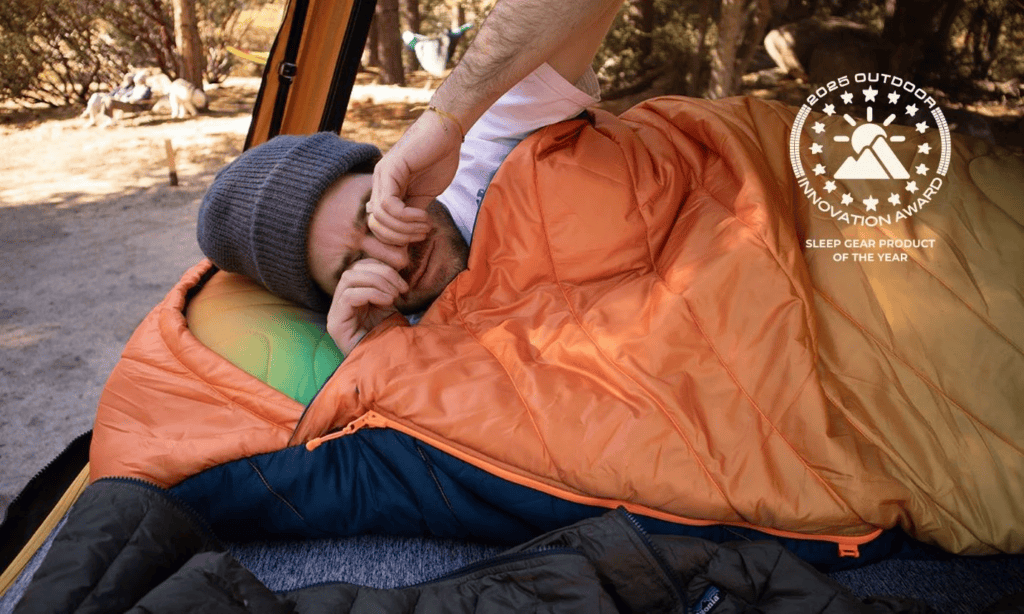
Then she took the Rumpl Wrap Sack 20 on a school-trip chaperone weekend in the Rocky Mountains—and actually slept.
The Problem With Regular Sleeping Bags
If you’ve never felt it, the mummy-bag claustrophobia is hard to explain. If you have, no explanation is needed.
It’s the sense of being sealed in. You can’t roll over without the whole bag rolling with you. You can’t stick a leg out to cool off without unzipping the entire thing and letting all the heat escape. For a restless or warm sleeper—or anyone who just likes to move—a standard bag turns a night outside into a night of low-grade struggle. That’s why my wife had written sleeping bags off completely.
The Wrap Sack is built for exactly that person.
How the Wrap Sack Is Different
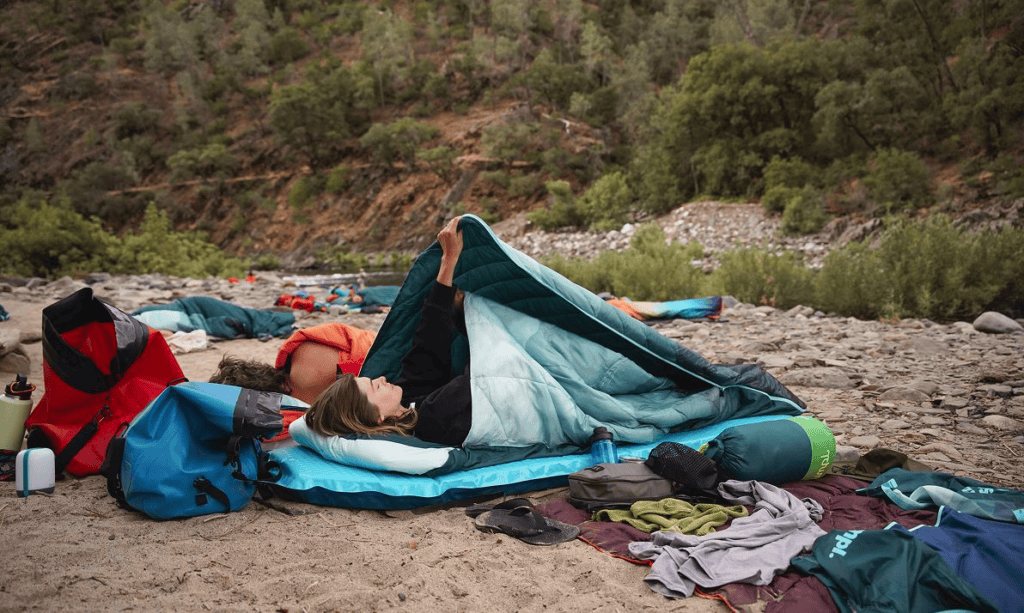
Rumpl started as a blanket company, and it shows. The Wrap Sack approaches the problem from the blanket side rather than the bag side, and that’s the whole trick.
Instead of a single sealed tube, it uses what Rumpl calls WrapAdapt™—three different wrapping configurations, so you set how enclosed (or not) you want to be. Cinch it up like a bag when it’s cold, or open it out and use it more like a layered blanket when you want freedom to move. A full two-way zipper panel lets you vent, stick a foot out, or drape it rather than commit to being sealed in.
For someone who feels trapped, that optionality is everything. It means the sleeper is in control of the enclosure instead of the bag dictating it. That’s the difference between “I’ll just use sheets” and “I actually slept.”
The Real-World Test: The Rockies
Here’s the part that sold us. A cold night at Rocky Mountain elevation is a real test—it’s the exact scenario where my wife would normally shiver under a blanket and wish she’d stayed home.
With the Wrap Sack, she slept comfortably. She could wrap in for warmth when the temperature dropped, then loosen it when she got warm, without the trapped feeling that had ruined every previous attempt. For someone who genuinely doesn’t like sleeping bags, sleeping well in one—at altitude, on a school-trip cot, no less—is about the strongest endorsement this product could get.
The Warmth Is Legit
None of that flexibility matters if you freeze, so credit where it’s due: the Wrap Sack is genuinely warm.
It’s a layered, two-part system—a RenewaLoft™ shell bag plus a NanoLoft® blanket liner. Used together, it’s rated to a 30°F comfort / 20°F limit; split apart into a single layer, it’s a 45°F comfort / 35°F warm-weather setup. That range makes it a legitimate three-season option rather than a fair-weather gimmick, and the two-piece design means you’re not hauling more bag than the night calls for.
The NanoLoft® fill is a synthetic down alternative, so unlike real down it keeps insulating even if it picks up moisture from tent condensation or morning dew—reassuring in the damp, unpredictable conditions the mountains like to serve up.
The Thoughtful Extras
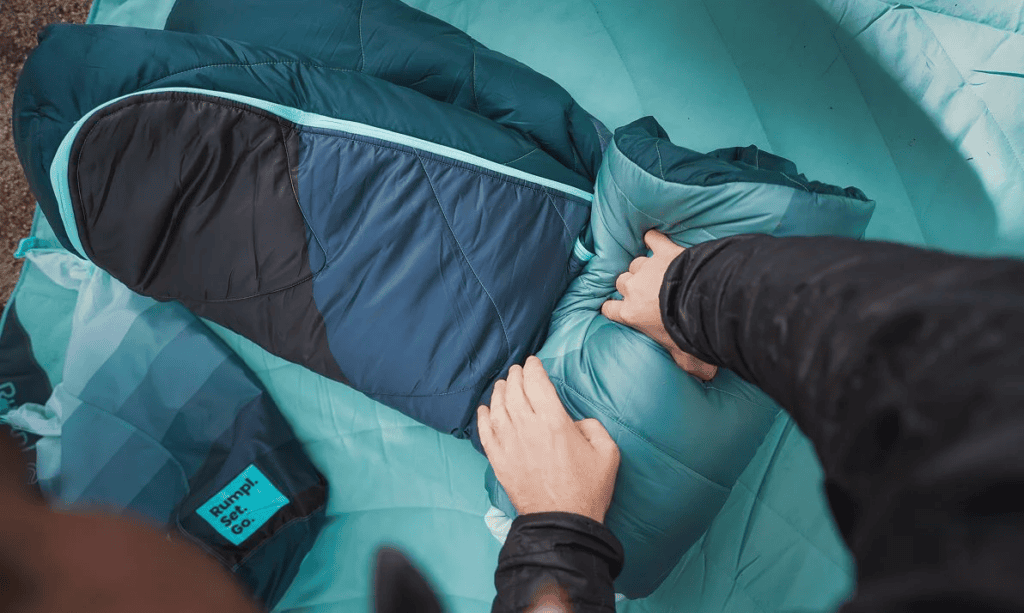
A few details round it out:
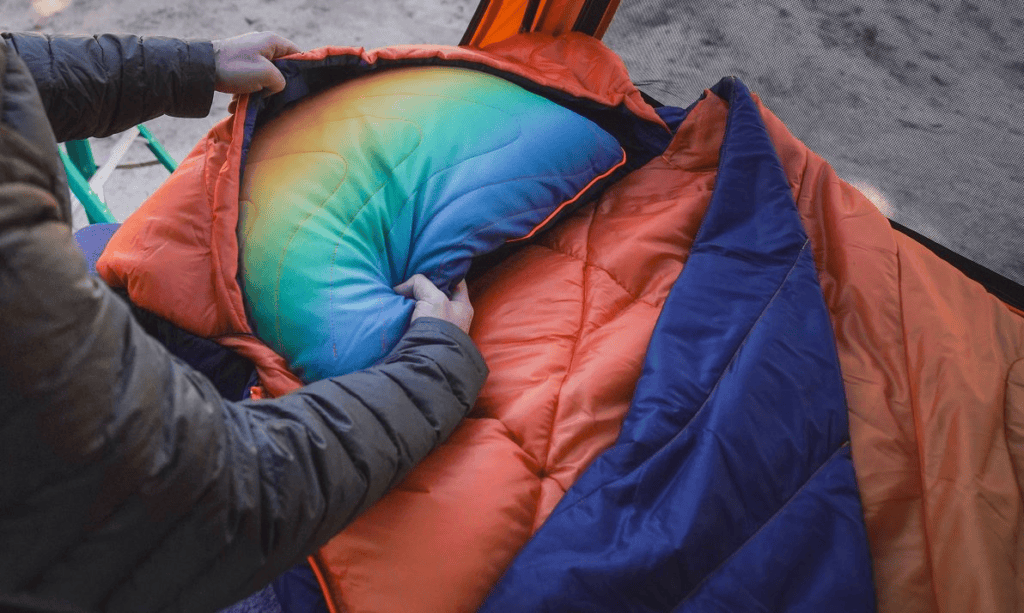
- Pillow pocket hood: a sleeve that holds a Rumpl Camp Pillow so it doesn’t wander off your pad at 2 a.m.
- Cape Clip® connections: secure the layers together, or wear the blanket around your shoulders around the campfire before bed.
- Machine washable: it cleans up in a front-load washer, which matters for a bag that gets hauled on school trips and family weekends.
- Roll-top stuff sack included: packs down for transport, though at 5 lbs this is a car-camping and basecamp bag, not an ultralight backpacking piece.
- Made from recycled materials: the whole thing is built from post-consumer recycled polyester—155 plastic bottles’ worth per bag.
A Few Honest Notes
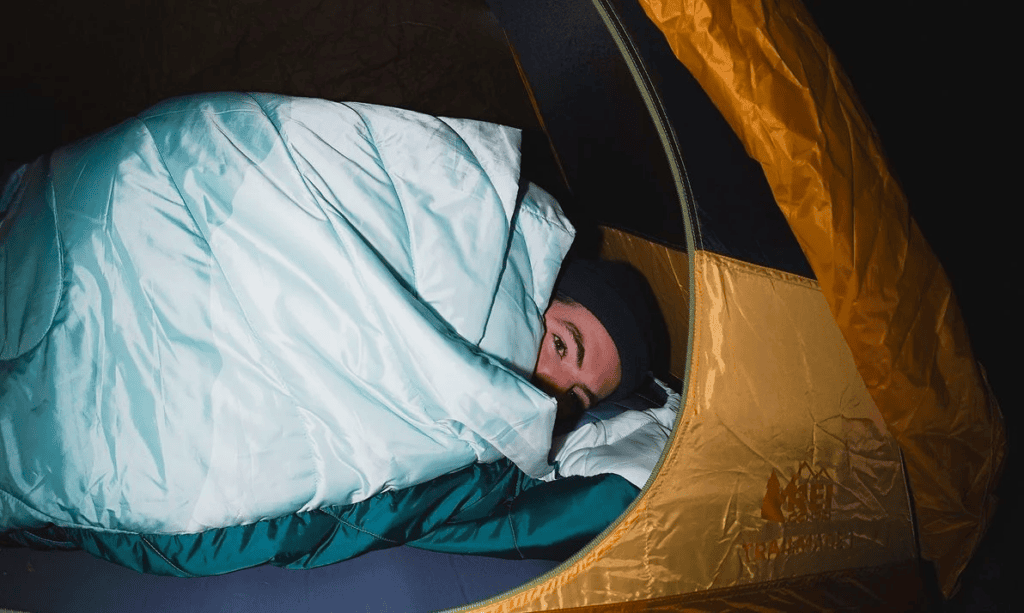
At $249.95 it’s priced as a premium bag, but for something that finally solved a years-long problem in our house, it earned it.
Two things to be clear about. First, weight: at 5 lbs, this is not a backpacking bag. It’s made for car camping, family trips, and basecamp, where you’re not carrying it far. Second, the star feature is really about sleep preference—if you already love a snug mummy bag, you may not need the Wrap Sack’s flexibility. But if you (or your partner) have ever tapped out of camping because sleeping bags feel like a trap, this is the one to try.
The Verdict
The Rumpl Wrap Sack 20 did something no other sleeping bag has managed: it got a committed sleeping-bag hater to sleep comfortably outside, on a cold Rocky Mountain night, without feeling trapped. The blanket-style WrapAdapt™ design, the genuine warmth of the two-layer system, and the small thoughtful touches make it a standout for family and car camping.
It’s not for ultralight missions, and dedicated mummy-bag fans may not need it. But for restless sleepers, warm sleepers, and anyone who’s ever felt caged by a zipper, the Wrap Sack is the rare piece of gear that changes whether someone wants to camp at all. In our house, it already has.
Technical Specs at a Glance
Rumpl Wrap Sack 20
- Temperature rating: Two layers: 30°F comfort / 20°F limit · One layer: 45°F comfort / 35°F limit
- Design: WrapAdapt™ blanket-style system, three wrapping configurations, full two-way zip panel
- Insulation: RenewaLoft™ shell + NanoLoft® synthetic down-alternative blanket liner (100% recycled polyester)
- Shell: VersaWeave™ 30D recycled ripstop polyester, PFAS-free water-repellent finish
- Weight: 5 lbs
- Flat dimensions: 35″ x 82″ (tapers 35″ to 32″)
- Fits: Users up to 6’2″
- Features: Pillow pocket hood, Cape Clip® connections, roll-top stuff sack, machine washable (front-load)
- Sustainability: Made from ~155 recycled plastic bottles
- Price: $249.95